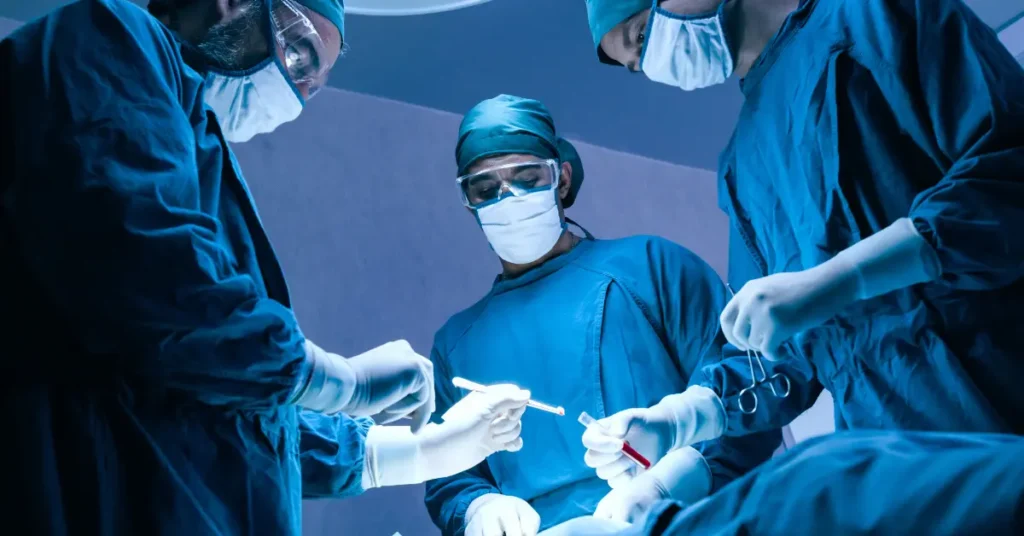
The Revolution That Changed General Surgery
When I completed my advanced surgical training—both in India and in Australia where I obtained my Fellowship of the Royal Australasian College of Surgeons (FRACS)—laparoscopic surgery was completely transforming what patients experienced after operations.
The shift from a ten-centimetre cut to tiny puncture marks is not just cosmetic. It is a massive clinical leap forward. Minimally invasive techniques reduce pain, lower infection risks, shorten hospital stays, and let people return to their normal work and family routines in days rather than weeks.
At EPIC Multispecialty Hospital, Ahmedabad, we perform advanced laparoscopy guided strictly by high-quality medical evidence. However, because these keyhole techniques are highly detailed, the specialized skill, volume, and training of the surgeon matter just as much as the modern equipment used.
How Laparoscopic Surgery Works
Laparoscopic surgery is performed through tiny cuts in the skin, typically measuring between 4 to 12 millimetres wide.
- Anesthesia & Airflow: The operation takes place under general anesthesia so you are completely asleep. The abdomen is gently inflated with carbon dioxide gas to lift the belly wall, creating a clear space for the surgeon to work safely.
- High-Definition Views: A thin tube containing a specialized camera (the laparoscope) is placed through one incision. This beams a highly magnified, 4K high-definition live view of your organs onto a monitor. It reveals microscopic details that are difficult to see with the naked eye during standard open surgery.
- Micro-Instruments: Long, slender surgical tools are inserted through the remaining small incisions to perform the structural repairs.
- Clean Closure: Once the work is done, the gas is safely released, the instruments are removed, and the tiny skin openings are closed with just one or two stitches or medical glue.
Evidence-Based Insights for Complex Procedures
While standard keyhole surgery is widely used for routine gallbladder removals and basic appendicitis, we specialize in high-complexity, advanced laparoscopy across three major anatomical areas. Here is what the latest clinical trials and international surgical data show:
- Advanced Surgery for Large Hiatus Hernias & Reflux
A hiatus hernia occurs when the upper stomach slides upward through a widened gap in the diaphragm muscle (the crural pillars) and into the chest cavity. This causes severe chronic acid reflux.
- The Advanced Technique: The surgeon performs crural repair, tightly stitching the diaphragm muscle back to its natural boundaries. Next, laparoscopic fundoplication is performed. This involves wrapping the upper curve of the stomach 360 degrees around the lower esophagus to create a brand-new, functional valve. This requires advanced intracorporeal suturing skills (stitching precisely inside the body using keyhole tools) to prevent injury to the esophagus.
- What the Clinical Data Shows: Massive patient database reviews published via the Society of American Gastrointestinal and Endoscopic Surgeons (SAGES) guidelines prove that laparoscopic hiatal repair has a clear edge over open thoracic (chest) or open abdominal surgery. Data points to far fewer post-operative breathing complications and wound breakdowns because the chest wall is left completely untouched. Successful keyhole repairs allow patients to entirely stop taking long-term acid suppression medications.
- Laparoscopic Surgery for Colon Cancer (Oncological Safety)
Historically, there were concerns that minimally invasive surgery could leave cancer cells behind or cause tumors to seed into small skin cuts. Major, long-term international trials have completely put those fears to rest.
- The Advanced Technique: We perform a radical resection to isolate and remove the cancerous segment of the colon with wide, safe margins. Simultaneously, a complete lymphadenectomy is done to harvest the surrounding lymph node basins for precise staging. The remaining healthy segments of the intestine are then securely reconnected (primary anastomosis) using specialized micro-vascular stapling.
- What the Clinical Data Shows: The landmark Clinical Outcomes of Surgical Therapy (COST) study group trial tracked colon cancer patients over a 5-year period. The peer-reviewed medical data compiled by the Cochrane Database of Systematic Reviews confirms that keyhole surgery is completely equivalent in cancer safety to open surgery, while speeding up systemic healing:
- Laparoscopic Management of Benign Colorectal Conditions
Non-cancerous, structural diseases of the lower digestive tract often require intricate bowel reshaping.
- Complicated Diverticular Disease: Recurrent, severe inflammation can form deep scar tissue, narrow pockets, or dangerous blockages in the colon wall. Advanced laparoscopy cleanly isolates and removes these highly inflamed, scarred segments.
- Inflammatory Bowel Disease (IBD): Severe Crohn’s disease or Ulcerative Colitis can cause deep tissue destruction. Minimally invasive resections cut away diseased bowel loops while purposefully minimizing future internal scarring.
- Rectal Prolapse: A structural failure where the lower rectum slips out of its normal pelvic boundaries. We perform a laparoscopic rectopexy, which gently lifts the dropped organ and secures it back onto the sacral bone framework using specialized mesh or micro-sutures.
- What the Clinical Data Shows: Studies published through NCBI PubMed Central show that keyhole methods directly preserve long-term pelvic function. The highly magnified, 4K camera view lets the surgeon clearly see and protect the pelvic autonomic nerves, which directly control bladder and sexual health. Additionally, minimizing internal handling reduces the duration of post-operative ileus (temporary bowel sleep), letting patients eat solid foods much sooner. It also drastically lowers the lifetime risk of developing emergency bowel obstructions caused by internal scar bands (adhesions).
The Safety Question: Training & Surgical Volume
A very common question patients ask me in Ahmedabad is whether laparoscopic surgery is truly as safe as open surgery. The answer is yes—and in many situations safer—but only when performed by a surgeon with appropriate training and high surgical volume.
Laparoscopic surgery is technically demanding. Operating while looking at a two-dimensional screen, using instruments that work through a fulcrum pivot effect, and dealing with reduced touch feedback requires thousands of hours of practice to master hand-eye coordination. A surgeon performing only five laparoscopic procedures a year is in a very different position from an expert performing over one hundred.
I believe in complete transparency with my patients. If your unique anatomy, severe scarring, or emergency condition makes open surgery a safer option, I will tell you directly. Shifting from a laparoscopic approach to an open surgery mid-operation is not a complication. It represents mature, correct surgical judgment made entirely to protect the patient’s life.
Recovery: What to Expect After Keyhole Surgery
Recovery from keyhole surgery consistently surprises our patients.
- Hospital Timelines: Most routine gallbladder removals and hernia repairs allow you to return home the same day or the following morning. Major colorectal cancer operations require a brief stay of just 4 to 5 days, compared to the 7 to 10 days expected with traditional open wounds.
- Pain Management: Patients generally describe mild discomfort that is easily controlled with simple oral pain relievers. Some experience temporary shoulder tip pain, which is caused by residual carbon dioxide gas tickling the diaphragm nerve; this fades completely within 24 to 48 hours.
- Returning to Daily Life: Desk work can usually be resumed within 3 to 5 days. Heavy physical labor, strenuous exercise, or active sports should be avoided for 3 to 4 weeks. Because there is no large muscle wound to heal, your deep internal healing dictates your timeline—not your skin.
- Early Movement: I actively encourage patients to start gentle walking on the very day of surgery. The human body mends much faster when it is kept gently active.
Direct Patient Safety Notice
Verification Checklist for Your Recovery
Always double-check your physical hospital discharge label, your customized take-home prescription sheets, and the specific post-operative care sheets provided by our medical team. Confirming your specific medication dosages, physical activity boundaries, and dietary staging timelines is vital for a safe, complication-free recovery.
Frequently Asked Questions
-
Is laparoscopic surgery available for complicated cases?
Yes. It can be performed safely for many complex situations, including patients with obesity, advanced cancers, emergency trauma, or multiple past abdominal surgeries. However, if an open approach is safer for your specific condition, we will always discuss it honestly.
-
Can gallstones come back after laparoscopic gallbladder removal?
No. Once the gallbladder is surgically removed, gallstones cannot form there because the organ is entirely gone. Very rarely, a stone can form independently inside the main bile duct (a condition called choledocholithiasis), but this is a separate medical issue and is unrelated to your original surgery.
-
What type of anesthesia is used?
Almost all laparoscopic procedures are performed under general anesthesia. The operation typically takes between 60 to 150 minutes depending on the complexity, and you will wake up comfortably in the recovery room shortly after it is complete.
-
Is laparoscopic hernia repair better than open repair?
For bilateral inguinal hernias (hernias on both sides of the groin), laparoscopy has massive advantages because both sides can be fully repaired through the exact same three tiny incisions, resulting in much less pain. For a single-sided hernia, both keyhole and open techniques have excellent outcomes, and the choice depends on your specific health factors.
-
What is the cost of surgery at EPIC Multispecialty Hospital, Ahmedabad?
Costs vary depending on the complexity of the procedure. Routine gallbladder and hernia repairs are the most affordable, while advanced colorectal or redo anti-reflux surgeries require highly specialized instruments and are priced accordingly. Standard health insurance policies completely cover laparoscopic procedures when they are clinically required. Our patient billing desk provides a fully itemized, transparent cost breakdown before you admit.

Dr. Gaurang Shah M.S., FRACS
General, Laparoscopic and Colorectal Surgeon, EPIC Multispecialty Hospital, Ahmedabad.