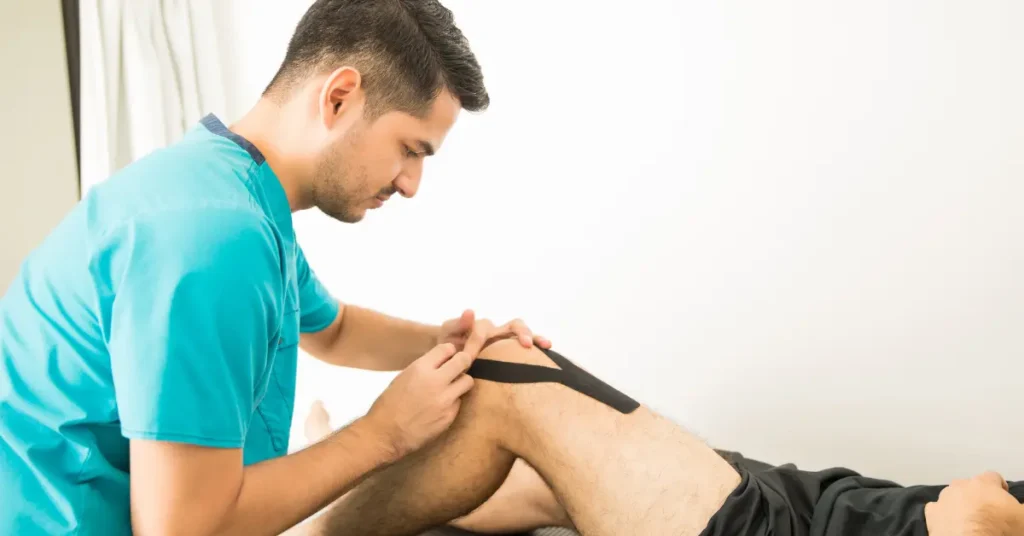
The Injury That Stops Athletes in Their Tracks
An ACL tear is one of the most common significant sports injuries I see at EPIC Multispecialty Hospital, Ahmedabad — and one of the most feared. Activa Riders, Cricketers, badminton players, football players, gym-goers who land badly from a jump — the mechanism varies, but the moment of injury is almost always distinctive: a sudden pain, a pop, sometimes an audible crack, followed by the knee swelling within hours.
If you have had this experience, or are worried that someone you know has, this article is for you. I want to explain what an ACL tear actually is, what the treatment options are, and most importantly — because this is the question every athlete asks — what it means for getting back to your sport.
The honest answer is: with the right surgery and the right rehabilitation, most people get back to the sport they love. It takes time. It takes commitment to the rehab process. But it is achievable, and I see it happen regularly in my practice.
What the ACL Does and Why Its Injury Matters
The anterior cruciate ligament runs diagonally through the centre of the knee, connecting the thigh bone to the shin bone. Its primary job is to prevent the shin bone from sliding forward relative to the thigh bone and to control rotational stability of the knee — the stability that allows you to cut, pivot, change direction, and land from a jump without the knee giving way.
When the ACL tears — fully or partially — this rotational control is lost. The knee feels unstable, particularly with activities that involve cutting movements. Many patients describe a feeling of the knee wanting to give way, or actual episodes of giving way during normal activity like walking downstairs or turning suddenly.
An MRI scan confirms the diagnosis and shows whether there are any associated injuries — the meniscus is often injured at the same time as the ACL, and the cartilage on the joint surfaces may be involved. These associated injuries affect the treatment planning.
Non-Operative Treatment: One of the treatment options (we have used it successfully at Epic) is Advanced PRP injection followed by specific supervised Physiotherapy and excellent quality ACL Knee Brace Support with Full immediate mobility.
Does Every ACL Tear Need Surgery?
This is genuinely an individual decision, and I want to be honest about the fact that not everyone with an ACL tear needs surgery. An older patient who is not involved in pivoting sports and has no functional instability may do well with physiotherapy-based rehabilitation and activity modification, without reconstruction.
For younger, active individuals in Ahmedabad who want to return to sports that involve cutting, pivoting, or contact — cricket, badminton, football, basketball, kabaddi — the prevalent opinion is typical: ACL reconstruction significantly reduces the risk of recurrent giving way episodes, associated meniscal and cartilage injury from repeated instability, and long-term knee osteoarthritis compared to non-surgical management in this group.
The question is not always “should I have surgery?” It is “what do I want to be able to do with this knee?” If the answer is anything that involves rotational load, the answer to surgery can be almost always yes.
Current Thinking: Previous belief was to wait 4 to 6 weeks after injury before the operation, but current evidence-based best practise is that surgery (Arthroscopic ) can be done any time immediately after injury too.
ACL Reconstruction — What the Operation Involves
ACL reconstruction at EPIC Multispecialty Hospital, Ahmedabad, is performed arthroscopically — through two or three small incisions using a camera and fine instruments, without opening the knee. A graft — typically from the patient’s own hamstring tendons (gracilis and semitendinosus) or occasionally the patellar tendon — is harvested and used to replace the torn ligament, anchored in bone tunnels drilled at the anatomical positions of the original ACL.
The choice of graft is something I discuss with every patient. Hamstring autograft is my most frequently used option — it is strong, has good long-term outcomes, and the donor site recovers well. Patellar tendon graft is an alternative with excellent results, particularly in high-demand athletes, but involves a more painful donor site recovery.
The arthroscopic approach means minimal scarring, lower infection risk, and faster recovery of knee motion compared to open surgery. Most patients are weight-bearing with crutches within a day or two of surgery and discharged home the following day.
Type of graft matters: Hamstring Tendons Graft or Bone-Tendon-Bone grafts are time-tested gold standard. Newer grafts haven’t got long term results yet. Graft-like materials (Open Weave Polyester implant) has already shown good early results and might be used in selected patients although it is more expensive.
Augmenting ACL graft: In patients with high end Sports demand or those with very loose joints; additional procedure to strengthen the knee by tissue graft /transfer from around the knee (Lateral Extraarticular Tenodesis) are proven to be beneficial. It increases the surgical time and is more expensive, but saves the knee better from further damage!!!
Rehabilitation — The Part That Determines the Outcome
I tell every ACL patient I operate on at EPIC Multispecialty Hospital, Ahmedabad, the same thing: the surgery is the easy part. The rehabilitation is where the outcome is determined.
ACL reconstruction involves transplanting a graft that has to undergo a biological process called ligamentisation — the graft, initially strong, goes through a period of relative weakness as it remodels into a ligament-like structure, becoming strong again over six to nine months. This process is why the return-to-sport timeline for ACL reconstruction is nine to twelve months — not because of the surgery, but because of the biology of graft maturation.
Returning to pivoting sports before the graft has matured, and before specific strength and movement quality criteria have been met, significantly increases the risk of re-injury. I work with physiotherapists who understand these criteria and apply objective testing — single-leg hop tests, quadriceps strength ratios, movement quality assessment — before clearing any patient for return to sport.
My patients who commit to this process — who do their exercises consistently, who are patient with the timeline, who return to sport only when they are genuinely ready — get back to their sport at close to the level they were before. That is the outcome I want for every athlete who comes to see me.
Common Questions Patients Ask
How soon after an ACL injury should I have surgery?
There is no advantage to operating immediately after an ACL injury — the swelling and inflammation in the acute phase make surgery technically more difficult and recovery harder. I generally recommend a period of four to six weeks before surgery, using physiotherapy to reduce swelling, restore knee motion, and build quadriceps strength. This pre-operative physiotherapy improves post-operative outcomes.
Can an ACL tear heal without surgery?
The ACL has very limited healing capacity due to poor blood supply. While some partial tears may produce functional stability, complete tears do not heal reliably without reconstruction. Conservative management without surgery can work for selected patients who are not involved in pivoting sports and have no functional instability — but this needs to be assessed individually.
Will I need a brace after ACL surgery?
I use a rehabilitation-based approach rather than relying heavily on bracing after ACL reconstruction. Early controlled movement is better for the graft and for muscle recovery than prolonged immobilisation in a brace. A hinged knee brace may be used for comfort in the first few weeks, but the emphasis is on progressive physiotherapy from day one.
Can the ACL be injured again after reconstruction?
Re-injury of the reconstructed ACL is possible — the risk is approximately five to fifteen percent, depending on the patient’s age, activity level, and return-to-sport readiness. This is why the return-to-sport criteria and timeline matter so much. Athletes who return to sport before meeting functional criteria have significantly higher re-injury rates.
Is ACL surgery available at EPIC Hospital Ahmedabad?
Yes. EPIC Multispecialty Hospital, Ahmedabad, performs arthroscopic ACL reconstruction with hamstring or patellar tendon autograft, with in-house physiotherapy for ACL rehabilitation and objective return-to-sport assessment.

Dr. Keyur Buch M.Ch., F.R.C.S.
Consultant Orthopaedic – Knee, Shoulder & Hand Surgeon (Joint Replacement, Arthroscopy & Fractures), EPIC Multispecialty Hospital, Ahmedabad.