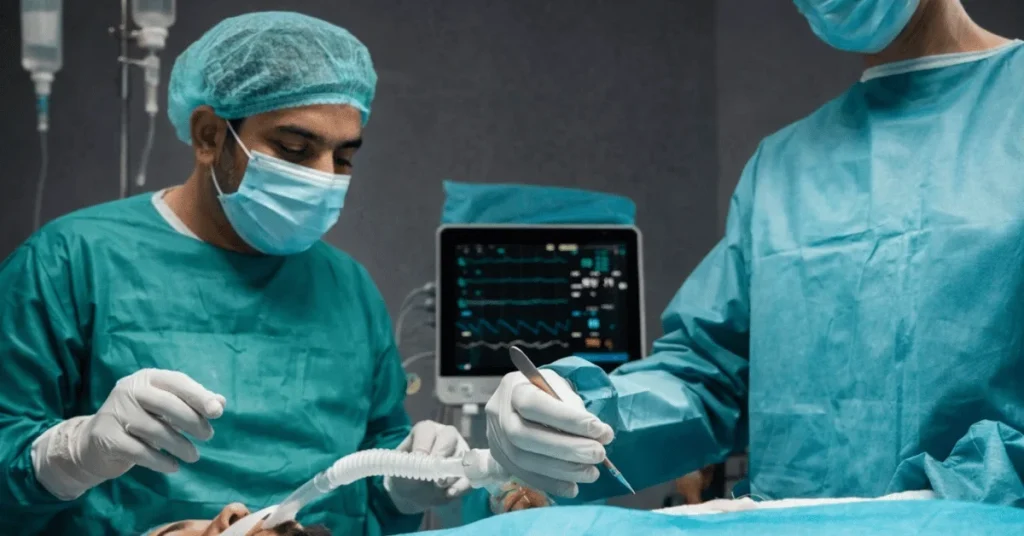
Your heart’s valves are mechanical in the most literal sense — they open and close with every single heartbeat, controlling blood flow direction through all four chambers. When one fails beyond repair, valve replacement surgery in Ahmedabad becomes not just a medical option, but the most important decision in your cardiac care.
At EPIC Multispecialty Hospital, valve replacement is one of our most frequently performed and most refined cardiac procedures. Our surgeons have replaced aortic valves, mitral valves, tricuspid valves, and combinations thereof — in patients ranging from young adults with congenital valve disease to elderly patients where traditional surgery isn’t appropriate.
The approach is different in each case. That’s the point.
When Valve Replacement Becomes Necessary
- Severe aortic stenosis: A critically narrowed aortic valve forces the heart to generate enormous pressure with every beat. Patients typically develop chest pain, fainting, and breathlessness as the condition progresses — and without intervention, the outlook deteriorates rapidly once symptoms appear.
- Severe mitral regurgitation beyond repair: When a leaking mitral valve cannot be reconstructed — because of calcification, extensive leaflet damage, or failed prior repair — replacement becomes the necessary alternative to progressive heart failure.
- Rheumatic multi-valve disease: Rheumatic heart disease remains a significant issue in Gujarat. Patients presenting with two or three damaged valves, often in their 30s and 40s, require careful surgical planning that balances replacement of the most critically affected valves against operative time and risk.
- Prosthetic valve failure: Biological valve prostheses have a finite lifespan. A patient who had valve replacement surgery 15 years ago may now be presenting with a failing bioprosthesis that requires redo replacement. These reoperations are complex, but our surgeons are experienced with them.
- Infective endocarditis with structural destruction: Severe valve infection that destroys leaflet tissue or causes uncontrolled sepsis despite antibiotics may require urgent surgical replacement — one of the more challenging and time-sensitive presentations in cardiac surgery.
Choosing the Right Valve — What the Decision Actually Involves
The choice between mechanical and tissue valve replacement is one of the most important conversations your cardiac surgeon will have with you — and it deserves a proper explanation rather than a quick recommendation.
Mechanical valves are built from carbon and metal. They can last a lifetime, which makes them appealing for younger patients who want to avoid a redo procedure in 15 years. The trade-off is lifelong anticoagulation with warfarin — a medication that requires regular blood tests, careful dietary management, and carries a small but real bleeding risk. In Gujarat, where dietary habits and lifestyle vary significantly, managing warfarin requires patient commitment.
Tissue valves — made from bovine or porcine pericardium — don’t require long-term blood thinners in most cases. They’re far more convenient from a lifestyle standpoint. But they degrade over time, typically lasting 10 to 20 years before a redo procedure becomes necessary. For a 75-year-old, that’s unlikely to be an issue. For a 45-year-old, it means planning for a second operation.
And then there’s TAVI — transcatheter aortic valve implantation — which delivers a new valve through a catheter in the groin or chest wall, without opening the chest at all. Originally reserved for patients too high-risk for surgery, TAVI is now an increasingly discussed option for a wider range of patients. We offer it at EPIC Hospital in Ahmedabad and assess suitability jointly with our interventional cardiology team.
What Patients Ask About Valve Replacement Surgery
How long does valve replacement surgery take at EPIC Hospital?
A single valve replacement typically takes 3 to 4 hours. Combined procedures — valve plus bypass, or double valve replacement — take longer, sometimes 5 to 7 hours. Your surgeon will give you a specific estimate before the operation.
Will I need blood thinners after valve replacement surgery in Ahmedabad?
If you receive a mechanical valve, yes — lifelong anticoagulation with warfarin is required. If you receive a tissue valve, most patients need anticoagulation for 3 months only. TAVI patients typically receive dual antiplatelet therapy rather than warfarin. The regime depends on what’s implanted.
Can elderly patients safely undergo valve replacement surgery?
Age alone is not a contraindication — surgical fitness is. Elderly patients with well-controlled comorbidities can have excellent outcomes from valve replacement. For those who aren’t suitable for open surgery, TAVI offers a genuine alternative. We assess each patient individually.
What is recovery like after valve replacement in Ahmedabad?
Most patients are hospitalised for 5 to 8 days. Light activity resumes within the first week. Driving and heavier activities typically resume at 6 to 8 weeks. The sternum takes 6 to 8 weeks to heal — that is the main limiting factor for activity in the early weeks.
Valve Replacement at EPIC — Done Right, Every Time
Valve replacement surgery in Ahmedabad at EPIC Multispecialty Hospital means you are cared for by a team that has done this hundreds of times, uses the best available prosthetics, takes the repair-vs-replace decision seriously, and stays with you from surgery through recovery.
Book a surgical consultation online, call our cardiac surgery team today, WhatsApp your echocardiography report for an initial assessment, or visit EPIC Hospital in Ahmedabad — and let’s plan this together.