Why This Procedure Matters
In the past, patients with a badly damaged heart valve who were too old or too frail for open surgery had very few options. Medicines could ease some symptoms, but they could not fix the valve itself. Today, that has changed.
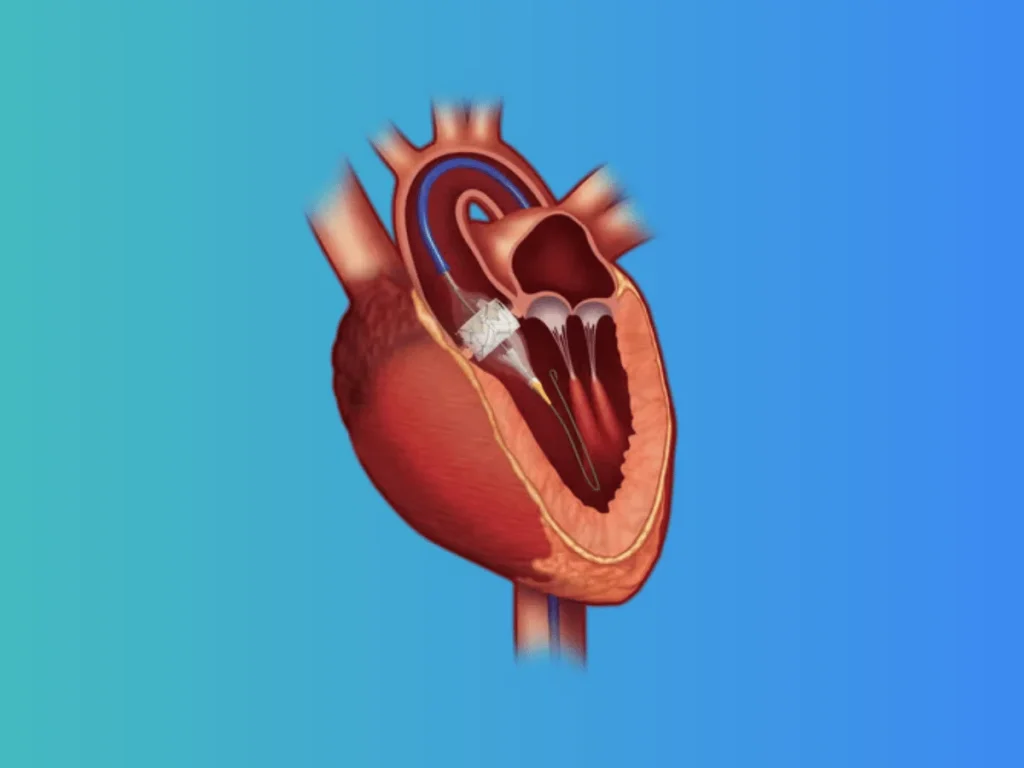
TAVR — which stands for Transcatheter Aortic Valve Replacement, also called TAVI — lets us replace the damaged valve through a small tube inserted in the groin. There is no cutting open of the chest, and the heart does not need to be stopped. Many patients who were once told nothing more could be done are now walking out of the hospital within a few days with a new, working valve.
At EPIC Multispecialty Hospital, Ahmedabad, I am proud to be part of a team that offers this procedure with the same standards applied in the best cardiac centres anywhere in the world.
What Is Aortic Stenosis? (In Simple Terms)
Think of the aortic valve as a one-way door inside your heart. Every time your heart beats, this door opens to let blood flow out to the rest of your body, then closes so blood doesn’t flow backward.
Over time, this “door” can become coated with calcium, like limescale building up inside a pipe. It gets stiff and the opening becomes narrower. Your heart then has to push much harder to force blood through the small gap — like trying to breathe through a narrow straw. Eventually, the heart gets tired and cannot keep up. This condition is called aortic stenosis.
Common warning signs include:
- Getting breathless doing things that used to be easy, like climbing stairs
- Tightness or pain in the chest
- Feeling dizzy or light-headed
- Fainting or blacking out
If these symptoms are present, it’s important to get the valve treated — simply waiting and watching is not safe once symptoms appear, because the condition tends to get worse quickly. The encouraging news is that this can now usually be treated without major surgery, through TAVR.
How the TAVR Procedure Works
Step 1: Planning and Scans
Before anything else, we do a detailed CT scan. This gives us a precise 3D map of your heart and the blood vessels leading up to it from the groin. It tells us exactly what size the new valve should be, and confirms there is a safe pathway for the catheter (a thin, flexible tube) to travel through.
Step 2: The Procedure Itself
On the day of the procedure, you will be given sedation to keep you comfortable and relaxed — most patients are not fully put to sleep, though general anaesthesia can be used if needed. A thin tube is gently guided from an artery in the groin up to the heart, using live X-ray images to see exactly where it is going.
The new valve — made of biological tissue mounted on a small metal frame, a bit like a spring — is carried through this tube and placed precisely inside your old, damaged valve. Once released, it opens up and starts working immediately, pushing the old valve tissue out of the way.
Step 3: No Cuts, No Stopped Heart
Unlike open-heart surgery, there is no incision in the chest and the heart never stops beating. The whole procedure usually takes 60 to 90 minutes, and most patients notice they are breathing more easily within a day or two.
Who Should Consider TAVR?
TAVR was first designed for patients who could not safely undergo open surgery — typically older patients, or those with other health issues such as lung disease, kidney disease, a previous heart surgery, or general frailty. As results have been consistently excellent worldwide, TAVR is now also offered to many patients at moderate or even lower surgical risk, depending on individual anatomy.
No single doctor decides on TAVR alone. At EPIC Multispecialty Hospital, Ahmedabad, every patient is discussed by a full “heart team” — the cardiologist, a cardiac surgeon, an imaging specialist, and an anaesthetist — who together review the scans and agree on the safest, most suitable plan for that person. This team-based approach is considered the gold standard around the world.
In simple terms: if a doctor has told you or your family member that a heart valve is severely narrowed, and that open surgery would be risky, it is well worth getting a TAVR assessment before assuming nothing can be done.
Recovery: What to Expect, Day by Day
One of the most reassuring things about TAVR is how quickly patients bounce back — nothing like the long recovery of open-heart surgery. Here is a simple timeline families can expect:
- Day of the procedure: You will be monitored closely in a recovery area. The entry point in the groin is just a small puncture, not a cut, so there is minimal pain.
- Day 1: Most patients are already sitting up and walking. You will move from the monitoring unit to a regular room.
- Before going home: We perform an echocardiogram (an ultrasound of the heart) to confirm the new valve is sitting correctly and working well.
- Day 3 to 5: Most patients are discharged home.
- At home: You will take a blood-thinning medicine such as aspirin — and sometimes a second tablet for a few months — to protect the new valve while it settles in.
The improvement in how patients feel is often immediate and noticeable. Someone who was breathless just walking across a room often finds they can move freely again within days. For many families, watching a parent or loved one regain their independence and energy is an emotional and welcome change.
Common Questions Patients and Families Ask
Is TAVR the same as TAVI, or TAVAR?
Yes. TAVR, TAVI, and TAVAR are simply different short names used for the same procedure. At EPIC Multispecialty Hospital, Ahmedabad, we use them interchangeably. Don’t worry about the name — what matters is whether it’s the right treatment for you.
Will it hurt?
No. You will be given sedation or anaesthesia, so you will be comfortable throughout the procedure. Afterwards, there may be mild soreness at the small puncture site in the groin, which usually settles within a day or two.
How long will the new valve last?
Current evidence shows these valves performing well for more than ten years in most patients, and this data keeps improving as more experience is gathered worldwide. For younger patients, the heart team will discuss how valve life expectancy compares with open surgery, so the right choice can be made together.
What happens if the new valve wears out one day?
It can usually be treated with a second, smaller valve placed inside the first one — called “valve-in-valve” TAVR. This means even a future problem can often be managed without open surgery.
Is it safe for elderly or frail patients?
Yes — in fact, TAVR was developed specifically for elderly and frail patients who cannot safely undergo open surgery. Age alone is not a barrier; every patient is individually assessed.
How much does it cost, and is it covered by insurance?
Cost depends on the type of valve used and the length of hospital stay, and our team will explain this clearly before the procedure. Many insurance policies do cover TAVR when severe aortic stenosis is documented — our patient services team can help you check your specific coverage.
Talk to Us at EPIC Multispecialty Hospital, Ahmedabad
If you or someone in your family has been told that a heart valve is severely narrowed, or that open heart surgery would be risky, it is worth getting a TAVR assessment at EPIC Multispecialty Hospital, Ahmedabad before assuming nothing more can be done. You are welcome to book an appointment, call our team with your questions, or share your echocardiography report for an initial review. A new valve — and a real improvement in day-to-day life — may be more within reach than you think.

Dr. Abhishek Rajpopat M.D., D.M. Interventional Cardiologist
Dr. Abhishek Rajpopat is a renowned interventional cardiologist practicing at Epic Hospital, Ahmedabad as a consultant interventional cardiologist. He has more than fourteen years of experience in this field. Dr. Abhishek Rajpopat is an expert in performing Left Main Interventions and other complex procedures. He has also conducted several workshops based on interventional cardiology. Dr. Abhishek Rajpopat also has extensive experience in performing advanced catheter based treatments to manage various cardiac disorders.