
Fever Treatment in Ahmedabad - Expert Diagnosis and Care
Fever Treatment in Ahmedabad – Expert Diagnosis and Care at EPIC Hospital
Fever is one of the most common reasons people seek medical attention – and one of the most easily underestimated. In most cases, a fever is the body’s healthy immune response to infection: it is a sign that the immune system is working, not failing. But fever is also one of medicine’s most important signals – it can be the first manifestation of a serious infection, a life-threatening condition like meningitis or septicaemia, or a more complex illness requiring careful investigation.
In Ahmedabad and across Gujarat, fever presentations include a wide range of causes – from common viral upper respiratory tract infections, to dengue fever, malaria, typhoid (enteric fever), to rarer conditions like leptospirosis, rickettsial fever, and fever of unknown origin (FUO). Getting the right diagnosis quickly – and treating it specifically – is the difference between a swift recovery and a prolonged, complicated illness. EPIC Multispecialty Hospital provides comprehensive fever treatment in Ahmedabad with the diagnostic capability to identify the cause precisely and the specialist expertise to treat it effectively.
Common Causes of Fever in Ahmedabad
Viral Fever
The most common cause of fever in all age groups is viral infection – most often influenza, adenovirus, enterovirus, or other respiratory viruses. Viral fever is typically self-limiting, lasting 3–7 days, and is managed with antipyretics (paracetamol), adequate hydration, and rest. Antibiotics are not indicated for viral fever and are one of the leading causes of antibiotic resistance when inappropriately prescribed. EPIC’s physicians use specific diagnostic criteria to avoid unnecessary antibiotic use.
Dengue Fever
Dengue fever – caused by the dengue virus, transmitted by Aedes aegypti mosquitoes – is prevalent in Ahmedabad, particularly during and after the monsoon season. It presents with high fever, severe headache, retro-orbital pain, myalgia, arthralgia (breakbone fever), and a characteristic skin rash. The critical complication is dengue haemorrhagic fever (DHF) and dengue shock syndrome – where platelet counts fall dramatically and vascular leak causes internal bleeding and shock. EPIC Hospital monitors dengue patients closely with daily platelet counts, haematocrit, and haemodynamic assessment, and admits patients with warning signs – abdominal pain, persistent vomiting, bleeding, or rapid platelet decline
Typhoid Fever (Enteric Fever)
Typhoid fever is caused by Salmonella typhi – transmitted through contaminated food and water. It presents as a step-ladder fever pattern with headache, malaise, relative bradycardia, abdominal discomfort, and rose spots. Diagnosis is by blood culture (the gold standard), Widal test (limited specificity), and typhoid rapid antigen test. Treatment is antibiotic therapy – ceftriaxone, azithromycin, or fluoroquinolone depending on sensitivity – with fever resolution typically within 5–7 days of effective treatment.
Malaria
Malaria – caused by Plasmodium falciparum or Plasmodium vivax – presents with cyclical high fevers, rigors, sweating, headache, and myalgia. P. falciparum malaria can cause cerebral malaria, severe anaemia, acute kidney injury, and multi-organ failure if not treated promptly. Diagnosis is by peripheral blood smear and malaria rapid antigen test (RDT). Treatment is artemisinin-based combination therapy (ACT) for falciparum, chloroquine or primaquine for vivax
Fever of Unknown Origin (FUO)
Fever of Unknown Origin (FUO) is defined as fever above 38.3°C on multiple occasions, lasting more than 3 weeks, without diagnosis despite one week of inpatient investigation. Causes include occult infections (tuberculosis, endocarditis, abscess), autoimmune diseases (SLE, adult-onset Still’s disease, vasculitis), and malignancies (lymphoma). EPIC Hospital’s infectious disease and internal medicine team conducts systematic investigation of FUO – including CT PET scan, bone marrow biopsy, serology, and ANA/anti-dsDNA profiling – to reach a definitive diagnosis.
Fever Treatment Approach at EPIC Hospital, Ahmedabad
Accurate Diagnosis First
At EPIC Hospital, fever is never treated empirically without attempting a diagnosis. Complete blood count (CBC), peripheral smear, blood culture, dengue NS1 and antibody, malaria RDT, typhoid antigen test, urine culture, chest X-ray, and further investigations where indicated are ordered systematically to identify the cause. Treating a fever without knowing its cause risks missing a serious treatable condition and contributing to antibiotic resistance.
Symptomatic Management
While investigations are pending or in confirmed viral fever, paracetamol (acetaminophen) is the preferred antipyretic – used at appropriate doses to reduce fever and improve comfort. Ibuprofen and other NSAIDs are avoided in dengue due to the risk of bleeding. Adequate oral hydration or IV fluids support recovery across all fever types.
Specific Treatment by Diagnosis
Once a diagnosis is established, treatment is specific: antibiotic therapy for bacterial infections, antimalarial therapy for malaria, supportive care and platelet monitoring for dengue, immunosuppression for autoimmune causes of FUO. The precision of treatment at EPIC Hospital reflects the precision of diagnosis.
Why Patients Choose EPIC for Fever Treatment in Ahmedabad
- Experienced internal medicine and infectious disease specialists
- Rapid in-house diagnostics – blood cultures, malaria smear, dengue testing, blood counts within hours
- Dedicated fever management protocols for dengue, typhoid, malaria, and FUO
- Inpatient admission for monitoring of complex fever cases and high-risk patients
- Serving patients from Ahmedabad, Gandhinagar, and across Gujarat
Know Your Signs

Emergency Services
Our dedicated emergency team is available 24/7 to provide immediate medical care and support in critical situations.

Get In Touch
BOOK AN APPOINTMENT
Find Best Critical Care Hospital in Ahmedabad
Why choose Epic Multispecialty Hospital for Emergency & Trauma care?

Our Team of Expert Doctors

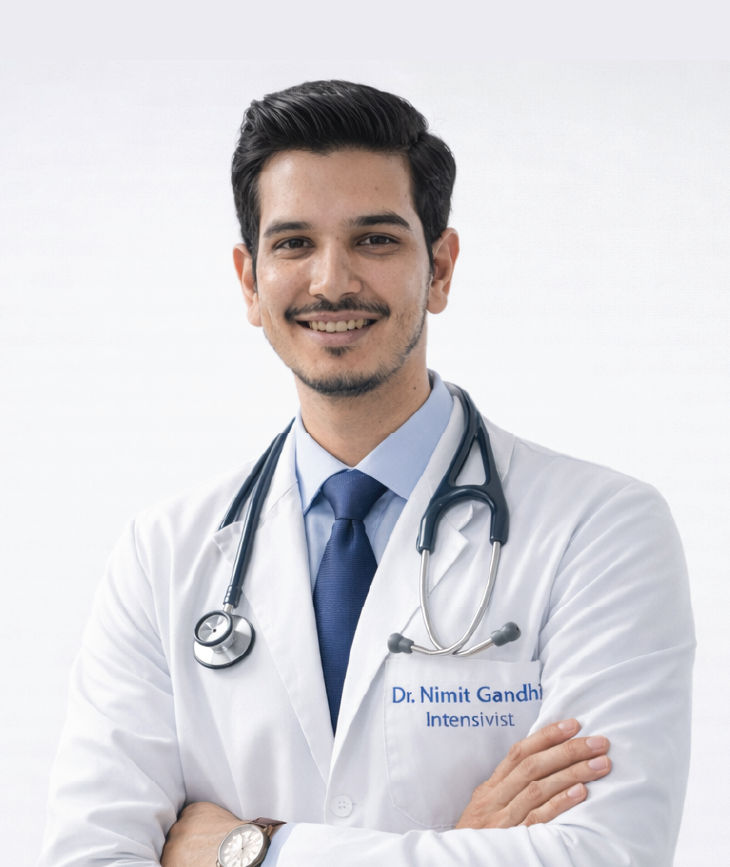



Talks By Our Expert Critical Care Doctors
After Covid Critical Care Medicine, Patient Feedback Father of Mr. Naman – EPIC
Who Manages the Most Critical Patients in the ICU?
World Sepsis Day
Our Patient Testimonial Critical Care
Who Manages the Most Critical Patients in the ICU?
World Sepsis Day
After Covid Critical Care Medicine, Patient Feedback Father of Mr. Naman – EPIC
Blogs By Our Expert Critical Care
Fever Treatment in Ahmedabad - FAQs
When should a fever be considered serious and require hospital care?
Seek medical attention at EPIC Hospital if fever is above 39°C, has persisted for more than 3 days, is accompanied by rash, stiff neck, severe headache, difficulty breathing, bleeding, or confusion, or if the patient is a child under 5, elderly, pregnant, or immunocompromised.
What is dengue warning signs and when does it need admission?
Dengue warning signs requiring hospital admission include abdominal pain or tenderness, persistent vomiting, fluid accumulation (ascites, pleural effusion), mucosal bleeding, lethargy or restlessness, liver enlargement, and rising haematocrit with rapidly falling platelet count. These indicate impending dengue haemorrhagic fever and require close monitoring.
What is the difference between dengue and malaria fever?
Dengue causes a continuous high fever with joint and muscle pain, headache behind the eyes, and rash. Malaria causes a cyclical fever – often every 48 or 72 hours – with rigors, sweating, and is associated with a thick and thin peripheral blood smear showing the parasite. Both are diagnosed with specific rapid tests.
What is the treatment for dengue fever?
There is no specific antiviral treatment for dengue. Management is supportive – paracetamol for fever, adequate oral or IV hydration, daily platelet and haematocrit monitoring, and hospital admission for warning signs. Aspirin and NSAIDs are avoided due to the risk of bleeding in dengue.
What is typhoid and how is it treated?
Typhoid fever is a systemic bacterial infection caused by Salmonella typhi. It requires specific antibiotic therapy – commonly ceftriaxone or azithromycin for 10–14 days. Blood culture confirms the diagnosis and identifies antibiotic sensitivity. Without treatment, typhoid can cause intestinal perforation and peritonitis.
How is fever diagnosed and treated at EPIC Multispecialty Hospital?
EPIC Multispecialty Hospital, Ahmedabad provides systematic fever diagnosis – blood culture, CBC, malaria, dengue, typhoid testing – and condition-specific treatment by experienced physicians, with inpatient monitoring for complex and high-risk fever presentations.
What is fever of unknown origin (FUO)?
Fever of Unknown Origin (FUO) is fever above 38.3°C persisting for more than 3 weeks without a diagnosis. It requires systematic investigation for occult infection (TB, endocarditis), autoimmune disease, or malignancy. EPIC Hospital’s internal medicine team conducts a structured FUO workup to reach a definitive diagnosis.
What is the cost of fever treatment at EPIC Multispecialty Hospital, Ahmedabad?
Contact EPIC Multispecialty Hospital Ahmedabad for fever treatment cost information. Outpatient consultation and basic fever investigations are affordable. Inpatient admission costs depend on duration and investigation requirements. Health insurance accepted.