The Person You Do Not Know Who Keeps You Safe Throughout
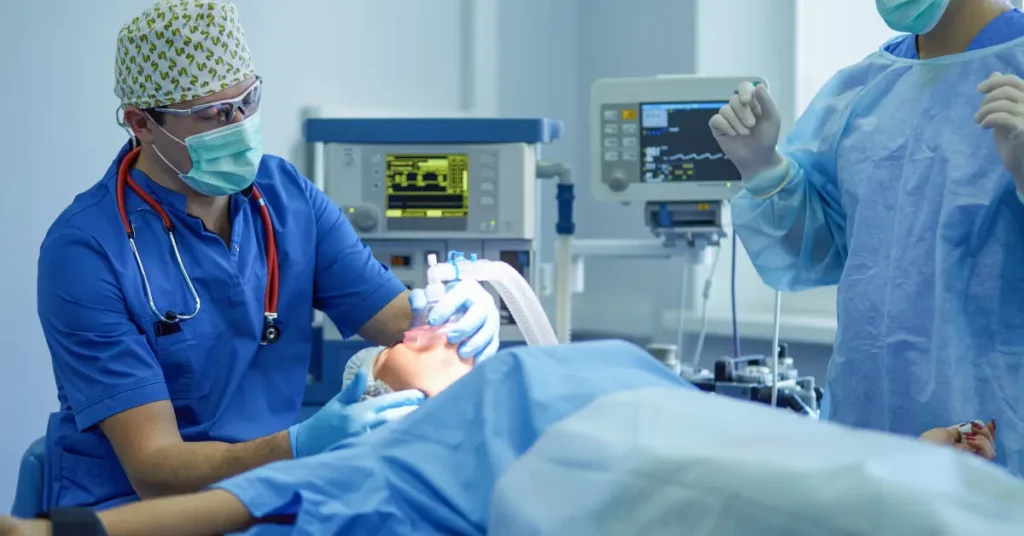
When patients and families think about heart surgery at EPIC Multispecialty Hospital, Ahmedabad, they think about the cardiac surgeon. Understandably so — the surgeon is the visible face of the procedure. But throughout every cardiac operation, there is another specialist whose continuous attention keeps the patient safe from the moment anaesthesia begins to the moment they are stable in the cardiac ICU.
That specialist is me — the cardiac anaesthetist.
My role begins well before the patient enters the operating theatre and continues until they are safely settled in the ICU. I want to explain what anaesthesia for cardiac surgery involves, because it is one of the most commonly misunderstood aspects of the entire experience — and understanding it, I believe, reduces the fear around it significantly.
The Pre-Operative Assessment — Why We Ask So Many Questions
In the days before cardiac surgery, I will meet with the patient for a pre-operative assessment. This meeting is not a formality. It is a detailed review of the patient’s overall health — beyond the heart condition that necessitates surgery — to understand all the factors that will influence how I manage the anaesthesia.
I want to know about previous anaesthetic experiences — any difficulties intubating, any allergies, any post-operative nausea problems. I want to know about kidney function, lung function, liver health, and any neurological conditions. I want to know what medications the patient takes and which need to be continued through the day of surgery and which should be held.
For cardiac surgery specifically, I want to understand the exact nature of the heart problem, the planned surgical approach, and whether cardiopulmonary bypass — the heart-lung machine — will be used. All of this informs my anaesthetic plan, which is tailored to each individual patient, not a standard protocol applied to everyone.
Patients and families are always welcome to ask questions during this assessment. The more the patient understands about what will happen — including the anaesthesia — the more settled they feel going into surgery.
The Day of Surgery — Step by Step
On the day of surgery, the patient is taken to the anaesthetic room adjacent to the operating theatre, where premedication is administered to help relieve anxiety and provide pain relief. The patient is then shifted to the operating theatre, where all necessary monitoring lines are placed and then induction of anaesthesia started.
Induction — going to sleep — is done with intravenous drugs delivered through a cannula in the arm. The process is smooth and quick. Most patients describe feeling a warmth spreading up the arm, and then simply being in the recovery room with no awareness of anything in between.
Once the patient is asleep, I place a breathing tube, insert the monitoring lines needed for cardiac surgery (arterial line for beat-by-beat blood pressure, central venous line, pulmonary artery catheter or TOE — a heart ultrasound probe — to monitor heart function throughout), and prepare for the surgical phase.
Throughout the operation, I continuously monitor blood pressure, heart rate, rhythm, oxygen levels, carbon dioxide levels, depth of anaesthesia, temperature, blood clotting, blood cell counts, and cardiac function. I manage blood transfusion, temperature control, and fluid balance. If the heart is stopped for valve surgery or bypass, I manage the transition to and from the cardiopulmonary bypass machine in coordination with the perfusionist.
The Cardiopulmonary Bypass Machine — What It Does and Why It Is Safe
For operations where the heart needs to be stopped — certain valve operations and some bypass procedures — a heart-lung machine (cardiopulmonary bypass or CPB) takes over the function of both organs. It pumps blood around the body and oxygenates it, while the surgical field is still and bloodless.
Many patients are anxious about the heart being stopped. I want to reassure them: the transition to bypass is carefully managed, the machine replicates the heart’s pumping function extremely well, and the heart is restarted at the appropriate stage of surgery. This process is standard in cardiac surgery, performed many thousands of times every year, and the safety record is excellent at experienced centres.
Modern cardiopulmonary bypass uses sophisticated technology — membrane oxygenators, centrifugal pumps, heat exchangers for temperature control, and cell salvage systems that reduce the need for blood transfusion. At EPIC Multispecialty Hospital, Ahmedabad, our perfusion team — who operate the bypass machine — are trained specialists with extensive cardiac surgery experience.
After Surgery — The Journey to Recovery
After surgery is complete, the patient is transferred to the cardiac ICU with monitoring in place. My role continues in the immediate post-operative period — managing the transition from the anaesthetic, ensuring haemodynamic stability, managing pain, and coordinating with the ICU team for the patient’s first night.
The breathing tube is removed — extubated — once the patient is awake, following commands, and breathing adequately on their own. Once the tube is out, the patient can speak and is much more alert and present for their family.
I am available throughout the post-operative period for questions and concerns. The relationship I form with patients and families in the lead-up to cardiac surgery extends through the procedure and into recovery. My goal, and the goal of everyone at EPIC Multispecialty Hospital, Ahmedabad, is that every patient goes home with their heart problem corrected, their recovery smooth, and their experience of the surgical journey as positive as it can be.
Common Questions Patients Ask
Will I feel anything during cardiac surgery?
No. General anaesthesia for cardiac surgery produces complete unconsciousness and the absence of any awareness or sensation throughout the procedure. The monitoring systems I use include depth-of-anaesthesia monitoring to ensure this consistently.
Is it dangerous to have anaesthesia with a weak heart?
Cardiac anaesthesia specifically accounts for a weakened heart. The drugs used, the monitoring intensity, and the support systems available are all calibrated for patients with cardiac conditions. A cardiac anaesthetist — as distinct from a general anaesthetist — has specific training in managing exactly these situations safely.
What if I have allergies to anaesthetic drugs?
Please tell me about any allergies during the pre-operative assessment. I will review your drug allergy history carefully and plan the anaesthetic to avoid any agents that pose a risk. If you have had an anaesthetic reaction in the past, please bring documentation to the pre-operative meeting.
Will I feel nauseated after cardiac surgery?
Post-operative nausea and vomiting (PONV) is common after any general anaesthesia, and I take steps to prevent it — using anti-emetic medications at induction and choosing anaesthetic techniques that reduce PONV risk. Most patients manage well with the prevention strategies in place.
Can I meet the cardiac anaesthetist before surgery?
Yes — the pre-operative assessment is specifically designed for this meeting. Please use it to ask every question you have about the anaesthesia. Understanding what will happen reduces anxiety, and that is valuable for your wellbeing going into surgery. At EPIC Multispecialty Hospital, Ahmedabad, family members are welcome to join the pre-operative discussion.