
When a Child Needs a Neurosurgeon
No parent in Ahmedabad expects to hear that their child needs brain surgery. It is one of those sentences that feels impossible — too large to process, too frightening to accept. I have sat with hundreds of families in this moment over the course of my career as a paediatric neurosurgeon at EPIC Multispecialty Hospital, Ahmedabad, and the first thing I always do is slow down.
A child needing neurosurgical assessment is not the same as a child who has been given a hopeless prognosis. The conditions I operate on most frequently in children — hydrocephalus (fluid on the brain), brain tumours, Head injury, Paediatric stroke, Chiari malformation, spinal cord tethering, and spina bifida, Epilepsy — are all conditions with established treatments and, in most cases, very encouraging outcomes when managed well.
What I want parents to take from this article is a clearer picture of what paediatric neurosurgery actually involves, and why early assessment, when symptoms appear, makes such a difference.
Children’s Brains Are Different — And That Is Mostly Good News
One of the most important things to understand about paediatric neurosurgery is that children’s brains have a remarkable capacity for recovery and adaptation that adult brains do not have to the same degree. This property — called neuroplasticity — means that a child’s brain can often compensate for injury or surgery in ways that would not be possible in an adult.
This does not mean paediatric neurosurgery is without challenges. Operating on a small brain in a small skull requires instruments, techniques, and training specifically designed for children. The physiological management of a child during and after surgery is different from adults. This is why paediatric neurosurgery is a distinct subspecialty — and why it matters that the surgeon treating your child has specific paediatric training and experience, not just general neurosurgical expertise.
At EPIC Multispecialty Hospital, Ahmedabad, I operate exclusively on paediatric patients — infants through adolescents — which means every aspect of our programme, from anaesthesia to post-operative nursing, is calibrated for children.
Common Conditions I Treat in Children
Hydrocephalus — often called water on the brain — is one of the most common conditions I manage. It occurs when cerebrospinal fluid, which normally circulates around the brain and spine, accumulates and increases pressure inside the skull. Signs in infants include a rapidly growing head circumference, bulging fontanelle, and irritability. In older children, symptoms include headache, vomiting, and changes in vision. Treatment is typically a ventriculoperitoneal shunt — a thin tube that diverts the excess fluid to the abdomen where it is absorbed. In some cases, an endoscopic procedure called ETV avoids the need for a shunt entirely.
Brain tumours in children, while worrying to hear about, are often benign or low-grade and respond well to surgery. Cerebellar astrocytoma, ependymoma, and craniopharyngioma are among the more common paediatric brain tumours I operate on. Many children return to normal schooling and activity after treatment.
Tethered spinal cord, spinal dysraphism, and myelomeningocele involve abnormal development of the spine and spinal cord — treated surgically to prevent progressive neurological deterioration.
Paediatric head injuries are frequently observed and necessitate prompt medical intervention to mitigate potentially life-threatening complications. Commonly encountered conditions such as skull fractures, subdural hematomas, extradural hematomas, brain contusions, and diffuse axonal injuries require consultation with a paediatric neurosurgeon. Treatment modalities, which may include medication or surgical procedures, are determined by the paediatric neurosurgeon.
Paediatric stroke is not an uncommon condition. Paediatric patients are susceptible to haemorrhagic or ischemic strokes, often stemming from underlying conditions such as Moya Moya disease, arteriovenous malformations (AVMs), cavernomas, hemangioblastomas, and aneurysm ruptures. Consequently, these patients typically require angiography, with subsequent treatment tailored to the specific underlying pathology, which may include surgical interventions such as STA-MCA bypass, AVM excision, or aneurysm clipping.
Chiari malformation — where the lower part of the brain sits too low in the skull opening — causes headache, neck pain, and sometimes spinal cord symptoms. A straightforward decompressive procedure relieves the pressure and produces significant symptom improvement in most patients.
Surgery Day — What Families Can Expect
I know that watching your child go into surgery is one of the hardest things a parent does. I want to give you a realistic, reassuring picture of how we manage this at EPIC Multispecialty Hospital, Ahmedabad.
Before surgery, you will meet the full team — the anaesthetist who will look after your child during the procedure, the nursing team, and myself. You will have the chance to ask every question. Children are given anaesthetic in a gentle, age-appropriate way — most go off to sleep without distress.
In the operating theatre, we use Microscope, endoscope, neuronavigation, and neurophysiological monitoring — equipment and techniques specifically designed to make paediatric brain and spine surgery as safe as possible. We work carefully and methodically.
After surgery, your child will be in a dedicated paediatric recovery area . Parents are encouraged to be present as much as possible during recovery, because a familiar, comforting presence is genuinely beneficial to a child’s recovery.
Recovery and Rehabilitation
Children often recover from surgery faster than parents expect — and much faster than adults. The brain’s plasticity, combined with a child’s natural resilience, means that many children are up and about within days of neurosurgical procedures that would keep an adult bedbound for weeks.
Rehabilitation — physiotherapy, speech therapy, or occupational therapy — is started early when needed, and children respond to rehabilitation very well. School and normal activities are usually resumed within weeks to months, depending on the procedure.
My most important piece of advice to parents in Ahmedabad: if your child’s doctor has suggested a neurosurgical assessment, please do not delay it. The conditions that paediatric neurosurgeons treat tend to progress if left unaddressed — and the earlier we see the child, the more options we have and the better the outcomes we achieve. Early assessment is not a commitment to surgery — it is a commitment to getting the right information so the right decisions can be made.
Common Questions Patients Ask
At what age can children have brain surgery?
Paediatric neurosurgery is performed from the newborn period through to adolescence. Infants with hydrocephalus or myelomeningocele may need surgery within days of birth. Head injuries necessitate immediate consultation, with the subsequent treatment plan determined by a paediatric neurosurgeon. Older children with brain tumours or Chiari malformation are typically managed electively after a period of assessment and planning.
Will my child have permanent effects from brain surgery?
Outcomes depend on the condition and its severity at the time of treatment. Many children who receive timely surgical treatment for conditions like hydrocephalus, low-grade brain tumours, head injury, spina bifida , brain stroke or Chiari malformation have excellent long-term outcomes with minimal permanent effects. I discuss the specific expectations for each child’s condition in detail during consultation.
How long is recovery after paediatric brain surgery?
Recovery varies by procedure. Shunt surgery for hydrocephalus often involves a two to four day hospital stay and return to normal activity within two weeks. Brain tumour surgery has a longer recovery — typically one to two weeks in hospital and four to six weeks before return to school. I provide detailed guidance specific to each child’s procedure.
Is paediatric neurosurgery available in Ahmedabad?
Yes. EPIC Multispecialty Hospital, Ahmedabad, has a dedicated paediatric neurosurgery service with the specialised equipment, anaesthesia, and nursing support that paediatric brain and spine surgery requires.
What are the signs that a child needs a neurosurgical assessment?
Signs include a rapidly growing head in an infant, persistent or worsening headaches (particularly in the morning), vomiting without obvious cause, changes in balance or coordination, visual changes, ataxia, frequent falls while playing, seizures, weakness in the arms or legs, back pain with leg symptoms, or any new neurological symptom that parents feel is unusual for their child.
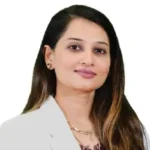
Dr. Ankita Desai M.S., M.Ch.
Paediatric Neurosurgeon, EPIC Multispecialty Hospital, Ahmedabad.