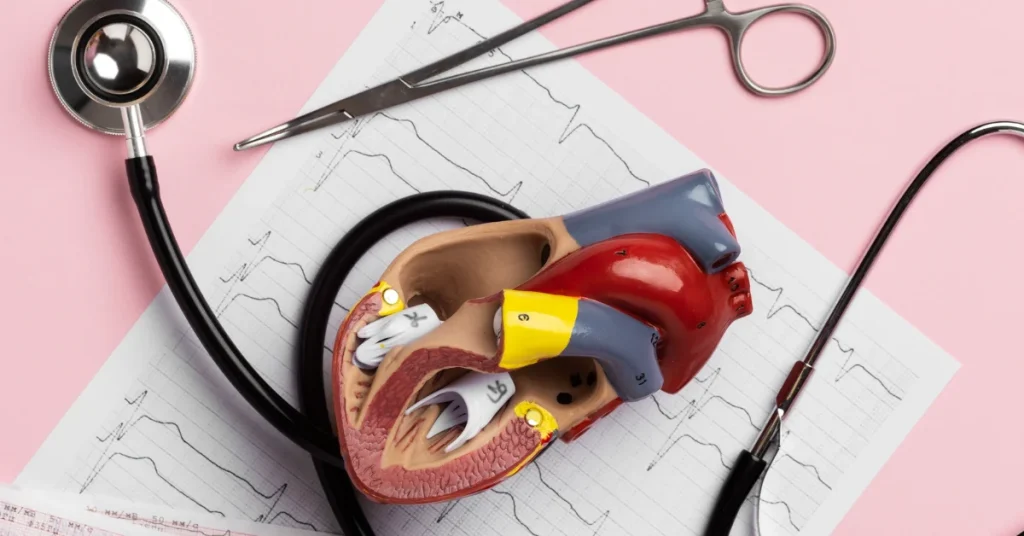
Valvular Heart Surgery in Ahmedabad – When Your Heart’s Valves Need More Than Medication
Your heart has four valves, and they open and close with every single heartbeat – around 100,000 times a day, every day of your life. When one of those valves starts to fail, the heart has to work harder to compensate. Over time, that extra strain takes a toll. And at a certain point, medication alone is not enough to keep up.
Valvular heart surgery in Ahmedabad at EPIC Multispecialty Hospital is built around one goal – restoring your heart to its proper rhythm of work, with the least disruption to your body and your life. Whether your valve needs to be repaired or replaced, our cardiac surgeons bring both the technical skill and the honest communication that a decision this significant deserves.
Which Valve Conditions Lead to Surgery?
- Rheumatic mitral valve disease: Rheumatic fever in childhood – still very common in India and Gujarat – can scar the mitral valve over years, causing it to narrow or leak. Many patients in Ahmedabad in their 30s and 40s carry this damage without knowing how serious it has become until symptoms appear.
- Aortic stenosis: The aortic valve gradually narrows – usually from calcium buildup in older patients, or from a valve that was not quite normal from birth. When it becomes severe, the heart struggles to pump blood out effectively. Patients feel breathless, get dizzy on exertion, or develop chest pain.
- Mitral regurgitation: A leaking mitral valve – where blood flows back the wrong way with each heartbeat instead of moving forward. The heart enlarges over time trying to compensate, and eventually function declines.
- Multi-valve disease: Rheumatic fever can damage more than one valve, and some patients in Ahmedabad present with two or even three valves that need attention. These combined procedures require careful planning and an experienced surgical team.
- Failed prosthetic valves: Patients who had valve surgery years ago can sometimes develop problems with their prosthetic valve over time. Redo surgery is technically more demanding – and our team has specific experience with it.
Repair or Replace – How That Decision Is Made
If you have been told you need valvular heart surgery, the most important conversation is about whether your valve can be repaired or whether it needs to be replaced. Repair is almost always the better option when it is technically possible – your own valve tissue works better than any prosthetic, and repair typically avoids the need for lifelong blood thinners.
Our cardiac surgeons at EPIC Hospital in Ahmedabad push hard to repair when the anatomy allows it – particularly for mitral valve disease. When replacement is the right answer, we explain the choice between mechanical valves (durable, require blood thinners) and tissue valves (no long-term blood thinners, may need replacement after 10 to 20 years) in plain terms, based on your age and lifestyle.
For patients who are elderly or have other health conditions that make open surgery very risky, TAVI – a catheter-based valve procedure done without opening the chest – is available at EPIC Hospital in Ahmedabad for suitable cases.
What the Recovery Looks Like
Most patients having valvular heart surgery in Ahmedabad at EPIC Hospital spend 5 to 8 days in hospital, including time in our cardiac ICU in the first day or two. By the end of the first week, most patients are walking around the ward. The sternum – the breastbone – takes about 6 to 8 weeks to heal fully, which is the main limitation on activity in the early weeks.
Cardiac rehabilitation begins before you leave the hospital and continues as an outpatient programme. Most patients are back to their normal daily routine – modified slightly for the healing period – within 6 to 8 weeks. Your surgeon will give you a specific, honest timeline based on your particular procedure.
Valvular Heart Surgery in Ahmedabad – Your Questions Answered
How do I know if my valve disease has reached the point of needing surgery?
Your cardiologist monitors your valve disease over time using echocardiography. Surgery is generally recommended when you develop symptoms – breathlessness, fainting, chest pain – when the valve becomes severely abnormal on imaging, or when the heart begins to enlarge in a way that signals it is struggling. The threshold varies by valve and by person. Regular follow-up with your cardiologist at EPIC Hospital in Ahmedabad is how you catch this at the right time.
Is valvular heart surgery safe?
For most patients, yes – the risks are low in experienced hands. For a standard valve replacement in an otherwise healthy patient, the surgical risk is well below 3 percent. Higher-risk patients – those with reduced heart function, previous surgery, or other medical conditions – carry a higher risk that your surgeon will calculate and explain specifically for your case.
Will I need blood thinners for life after valve surgery?
It depends on what is implanted. Mechanical valves require lifelong warfarin. Tissue valves generally require it only for 3 months. A repaired valve typically requires it for 3 months only. TAVI patients usually take antiplatelet medication rather than warfarin. Your cardiologist will manage this after surgery.
Can I get a second opinion on my valve surgery at EPIC Hospital?
Absolutely – and we encourage it. Bring all your echocardiography reports, recent ECG, and any previous clinic letters. Our cardiac surgeon will review everything and give you an honest, independent assessment.
Talk to Our Valve Surgery Team in Ahmedabad
Valvular heart surgery in Ahmedabad at EPIC Multispecialty Hospital is not something we take lightly – and neither should you. The right surgeon, the right approach, and the right support around you make all the difference.
Book a consultation online, call our cardiac surgery team today, WhatsApp your echocardiography report for an initial review, or visit EPIC Hospital in Ahmedabad – and let’s have a proper conversation about your heart valve.