
Brain Tumour Treatment in Ahmedabad - Surgical and Multi-Disciplinary Management at EPIC Hospital
A brain tumour diagnosis is one of the most frightening things a patient and family can receive – and in Ahmedabad and Gujarat, it is frequently followed by a period of confusion about where to go, which specialist to see first, and what the treatment options actually are. The range of brain tumours is wide – from completely benign, surgically curable meningiomas to aggressive glioblastoma multiforme (GBM) where the goal is extending meaningful survival while preserving quality of life – and the management approach differs radically across this spectrum.
At EPIC Multispecialty Hospital, Ahmedabad, brain tumour treatment is delivered through a multi-disciplinary neuro-oncology team – neurosurgeon, neurologist, medical oncologist, radiation oncologist, neuroradiologist, and neuropathologist – who review every new brain tumour diagnosis together before a treatment plan is formulated. This is not standard practice at every centre in Gujarat, and it makes a concrete difference to whether the right surgery is performed at the right time, followed by the right adjuvant treatment.
Patients from across Gujarat – from Vadodara, Surat, Rajkot, Gandhinagar, Anand, Nadiad, and Bharuch – and from Rajasthan and Madhya Pradesh seek brain tumour treatment at EPIC Hospital Ahmedabad because the combination of surgical expertise, intraoperative technology, and oncological management they need is available here as an integrated programme, not as a referral cascade between separate institutions.
Brain Tumour Types and Treatment at EPIC Multispecialty Hospital, Ahmedabad
- Gliomas – GBM, astrocytoma, oligodendroglioma: Gliomas arise from glial cells – the support cells of the brain – and range from low-grade (WHO grade 1 to 2) to high-grade (WHO grade 3 to 4, including glioblastoma). Glioblastoma multiforme (GBM) – WHO grade 4 – is the most common and most aggressive primary brain tumour, with a median survival of 14 to 17 months with maximal safe resection followed by Stupp protocol (concurrent temozolomide and radiotherapy, then adjuvant temozolomide). At EPIC Multispecialty Hospital, Ahmedabad, glioma surgery is performed with intraoperative navigation, awake craniotomy for tumours in eloquent regions, and fluorescence-guided surgery (5-ALA) where available – maximising safe resection extent, which is the single most modifiable prognostic factor.
- Meningiomas: Meningiomas arise from the meningeal covering of the brain – they are predominantly benign (WHO grade 1, representing 80 to 85 percent), slow-growing, and often incidentally discovered. Asymptomatic small meningiomas in non-critical locations can be observed with serial MRI. Symptomatic or enlarging meningiomas require surgical resection. Complete removal (Simpson grade 1 or 2) is associated with very low recurrence rates. Skull base meningiomas – involving the cavernous sinus, sphenoid wing, petroclival region – are among the most complex neurosurgical operations, requiring subspecialty skull base expertise available at EPIC Hospital Ahmedabad.
- Acoustic neuroma (vestibular schwannoma): Acoustic neuromas are benign tumours arising from the vestibular branch of the eighth cranial nerve – presenting with unilateral sensorineural hearing loss, tinnitus, and progressively with facial numbness and imbalance. Management depends on tumour size, growth rate, and patient factors: small tumours may be observed with MRI surveillance; medium tumours are candidates for stereotactic radiosurgery (Gamma Knife or CyberKnife); large tumours causing brainstem compression require surgical resection through retrosigmoid or translabyrinthine approaches, with hearing preservation attempted where feasible.
- Pituitary adenomas: Pituitary adenomas – benign tumours of the anterior pituitary – are among the most common intracranial tumours. Non-functioning adenomas are managed based on size and compressive symptoms. Functioning adenomas produce hormonal syndromes: prolactinoma (hyperprolactinaemia – managed medically with dopamine agonists as first-line, surgery for those who fail or cannot tolerate medical treatment), acromegaly (GH excess – surgery is first-line for accessible macroadenomas), and Cushing’s disease (ACTH excess – transsphenoidal surgery is the definitive treatment). Transsphenoidal surgery – through the nose and sphenoid sinus, without any external incision – is the standard surgical approach at EPIC Multispecialty Hospital, Ahmedabad.
- Metastatic brain tumours: Brain metastases – from lung, breast, kidney, melanoma, and colorectal primaries – are the most common intracranial tumours overall, outnumbering primary brain tumours 10:1. Management depends on the number of lesions, size, location, degree of systemic disease control, and performance status. Surgical resection of single large symptomatic metastases improves survival and neurological function. Stereotactic radiosurgery provides high-dose focal radiation to multiple or surgically inaccessible lesions. Whole-brain radiotherapy is used for diffuse metastatic disease. Our neuro-oncology team at EPIC Hospital Ahmedabad reviews each metastasis case in MDT.
- Intraoperative tools for maximum safe resection: Modern brain tumour surgery at EPIC Multispecialty Hospital, Ahmedabad, uses a combination of tools to maximise tumour removal while protecting neural function: neuronavigation to localise the tumour within the operative field; intraoperative ultrasound to identify residual tumour; awake craniotomy with cortical and subcortical mapping for tumours in eloquent regions (speech, motor); intraoperative neurophysiological monitoring (motor and somatosensory evoked potentials) for tumours near motor pathways; and 5-ALA fluorescence guidance, which causes glioblastoma tissue to fluoresce pink under violet light, enabling identification of tumour-brain borders that are invisible to white-light inspection.
Multi-Disciplinary Brain Tumour Management at EPIC Hospital Ahmedabad – Why It Changes Outcomes
The evidence that multi-disciplinary management of brain tumours improves outcomes – particularly in glioblastoma – is robust. Patients whose cases are reviewed in a neuro-oncology MDT meeting have higher rates of complete resection, more appropriate sequencing of surgery and adjuvant therapy, and better access to clinical trials and emerging treatments. In Gujarat, where brain tumour management has historically been fragmented – surgery at one hospital, oncology at another, radiotherapy at a third – the integrated MDT approach at EPIC Multispecialty Hospital, Ahmedabad, produces a qualitatively different treatment experience.
The neuropathology report from a brain tumour biopsy or resection specimen is now one of the most information-rich documents in oncology – not just a diagnosis of ‘glioma’, but a molecular profile that includes IDH mutation status, MGMT promoter methylation (which predicts response to temozolomide), 1p/19q co-deletion (which identifies oligodendroglioma and guides treatment), EGFR amplification, and TERT promoter mutation. These molecular markers, which are increasingly reportable from neuropathology laboratories accessible to EPIC Hospital Ahmedabad, fundamentally change the WHO grade classification of gliomas (the 2021 WHO classification is primarily molecular) and determine adjuvant treatment decisions.
For patients with glioblastoma specifically – where the disease trajectory is defined by inevitable recurrence despite treatment – the quality of decision-making at the outset is particularly important. Maximal safe resection at the first operation, rapid initiation of the Stupp protocol after recovery, and proactive planning for recurrence management (bevacizumab, re-operation, or clinical trial enrolment) are the decisions that affect survival and quality of life most directly. At EPIC Multispecialty Hospital, Ahmedabad, these decisions are made by a team rather than by a single surgeon or oncologist working in isolation – and that collaborative discipline is what best-practice neuro-oncology requires.
State-of-the-Art Modular Operating Theatre

Emergency Services
Our dedicated emergency team is available 24/7 to provide immediate medical care and support in critical situations.

Get In Touch
BOOK AN APPOINTMENT
Find Best Neurosurgeons Hospital in Ahmedabad
Why choose Epic Multispecialty Hospital for Neurosurgery care?

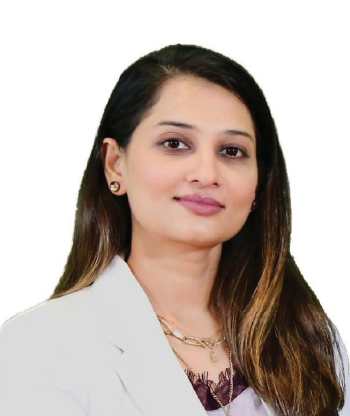
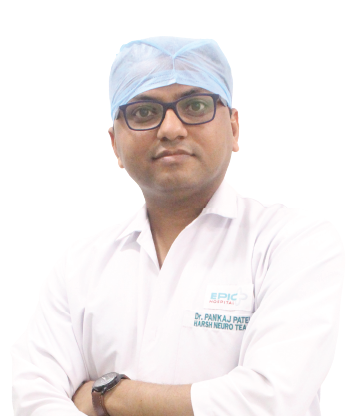
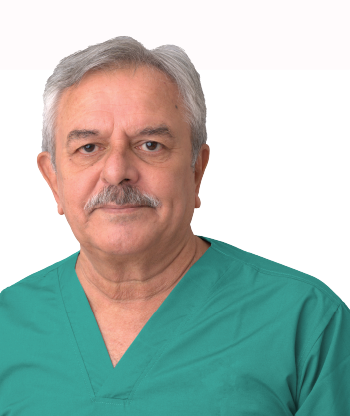
Our Team of Expert Neuro Surgeons
Talks By Our Expert Neuro Surgeons
Spinal Abscess and Drainage Excision – Dr. Ankita Desai & Dr. Ramil Diwanji
Endoscopic Third Ventriculostomy by Dr. Ankita Desai & Dr Ramil Diwanji
Comprehensive Neurosurgical Care at EPIC Multispecialty Hospital
Our Patient Testimonial Neuro Surgeons
Spinal Abscess and Drainage Excision – Dr. Ankita Desai & Dr. Ramil Diwanji
Endoscopic Third Ventriculostomy by Dr. Ankita Desai & Dr Ramil Diwanji
Comprehensive Neurosurgical Care at EPIC Multispecialty Hospital
Blogs By Our Expert Neuro Surgeons
Frequently Asked Questions - Brain Tumor Treatment in Ahmedabad
What are the symptoms of a brain tumour?
Brain tumour symptoms depend on location and size. Common presentations include new or worsening headaches (particularly morning headaches worsened by straining), new-onset seizures, progressive focal neurological deficit (weakness, speech difficulty, visual disturbance), cognitive or personality change, and raised intracranial pressure symptoms (headache, nausea, vomiting, papilloedema). Any of these symptoms warrant urgent neurological assessment and brain imaging.
Is all brain tumour surgery done awake?
No. Awake craniotomy is performed specifically for tumours located in or near eloquent brain regions – speech, language, or motor cortex – where intraoperative patient cooperation allows real-time monitoring of language and motor function during tumour removal. For tumours in non-eloquent regions, surgery is performed under general anaesthesia. Our neurosurgeons at EPIC Multispecialty Hospital, Ahmedabad, determine the appropriate approach based on tumour location on pre-operative mapping.
What is glioblastoma and what is the prognosis?
Glioblastoma multiforme (GBM) is the most aggressive primary brain tumour – WHO grade 4. With maximal safe resection and the Stupp protocol (concurrent temozolomide and radiotherapy, then adjuvant temozolomide), median survival is 14 to 17 months. MGMT-methylated GBMs – where the DNA repair enzyme is silenced – respond better to temozolomide and have somewhat better outcomes. Our neuro-oncology team at EPIC Hospital Ahmedabad will provide realistic, case-specific prognostic information.
What is a meningioma and does it always need surgery?
A meningioma is a usually benign tumour of the brain’s covering membrane. Small asymptomatic meningiomas can be observed with serial MRI surveillance. Surgery is indicated for symptomatic tumours, those causing neurological deficit, and those showing consistent growth on surveillance imaging. Complete surgical removal produces excellent long-term outcomes for most benign meningiomas.
What is transsphenoidal surgery for pituitary tumours?
Transsphenoidal surgery accesses the pituitary gland through the nose and sphenoid sinus – without any external incision on the head. It is the standard surgical approach for pituitary adenomas at EPIC Multispecialty Hospital, Ahmedabad, and removes most pituitary tumours through the same day or overnight procedure, with a short recovery. Endoscopic transsphenoidal surgery using a rigid endoscope through the nostril provides excellent visualisation of the sellar and suprasellar anatomy.
What is neuronavigation and is it available for brain tumour surgery?
Neuronavigation is a GPS-like intraoperative system that registers the patient’s pre-operative MRI to the surgical field, allowing the neurosurgeon to track instrument position relative to tumour margins, ventricular walls, and critical structures in real time. Yes, neuronavigation is routinely used for brain tumour surgery at EPIC Multispecialty Hospital, Ahmedabad.
What is the cost of brain tumour treatment in Ahmedabad at EPIC Hospital?
Brain tumour treatment costs at EPIC Multispecialty Hospital, Ahmedabad, vary based on the tumour type, surgical complexity, hospital stay, and adjuvant treatment (radiotherapy, chemotherapy). We provide transparent procedure-specific pricing. Insurance and PM-JAY coverage applies to most brain tumour treatments. Please contact our patient services team for current pricing and to discuss your specific situation.
Is EPIC Hospital Ahmedabad good for brain tumour surgery in Gujarat?
EPIC Multispecialty Hospital, Ahmedabad, provides multi-disciplinary brain tumour management – neurosurgery with intraoperative navigation, awake craniotomy capability, neurophysiological monitoring, 5-ALA fluorescence guidance, coordinated with neuro-oncology, radiation oncology, and neuropathology. Patients from across Gujarat and neighbouring states attend our brain tumour programme for both primary and recurrent tumour management.
Brain Tumour Treatment in Ahmedabad – EPIC Multispecialty Hospital
Brain tumour treatment at EPIC Multispecialty Hospital, Ahmedabad, is built on the multi-disciplinary, technology-supported, patient-centred model that gives every patient – regardless of tumour type or stage – the best chance of maximal surgical benefit and appropriately managed adjuvant care. If you or a family member has received a brain tumour diagnosis, the first step is a proper specialist assessment.
Book a brain tumour consultation online, call EPIC Multispecialty Hospital Ahmedabad today, WhatsApp your MRI reports for initial review by our neuro-oncology team, or visit us directly – and get the integrated brain tumour care your diagnosis requires.