
Pacemaker Implantation in Ahmedabad
Keeping Your Heart in Rhythm at EPIC Hospital
The heart has its own electrical system – a network of specialised tissue that generates and conducts the impulses that tell each chamber when to contract. When this system fails, the heart beats too slowly, pauses unpredictably, or stops responding appropriately to the body’s changing demands.
At EPIC Multispecialty Hospital, Ahmedabad, pacemaker implantation is performed by an experienced cardiac electrophysiology team that has managed the full range of bradyarrhythmias and conduction system disease. Whether you need a temporary pacemaker implantation in Ahmedabad for an acute conduction disturbance, or a permanent pacemaker implantation in Ahmedabad for a chronic condition, our team has the expertise and 24/7 availability to manage your case safely.
Understanding Pacemakers – What They Do and Why They Are Needed
A pacemaker is a small electronic device, implanted under the skin near the collarbone, that monitors the heart’s electrical activity and delivers a small electrical impulse whenever the heart rate falls below a programmed threshold or the conduction system fails to transmit an impulse correctly. Modern pacemakers are sophisticated, programmable devices – adjusting their output based on your physical activity, storing data about your heart rhythm, and allowing remote monitoring.
Temporary vs. Permanent Pacemaker – What Is the Difference?
Temporary Pacemaker Implantation in Ahmedabad
A temporary pacemaker is a short-term device used when the heart’s conduction system has acutely failed. Common indications include:
- Complete heart block occurring in the context of an acute heart attack, where conduction may recover after the artery is opened
- Life-threatening bradycardia caused by medication toxicity – particularly from digoxin, beta-blockers, or calcium channel blockers
- Symptomatic bradycardia in the period before permanent pacemaker implantation
- Peri-operative pacing cover during cardiac or non-cardiac surgery in patients at high risk of conduction failure
Permanent Pacemaker Implantation in Ahmedabad
A permanent pacemaker is implanted when a chronic conduction system abnormality requires ongoing electrical support. The generator sits in a small pocket created under the skin below the collarbone, and one or more leads connect it to the heart through a vein.
- Complete heart block (third-degree AV block): the atria and ventricles beat independently, with no electrical communication between them
- Second-degree AV block (Mobitz Type II): intermittent failure of electrical conduction – a significant risk of progression to complete block
- Sick sinus syndrome: failure of the heart’s natural pacemaker (the sinus node) causing bradycardia, pauses, and often alternating fast and slow rhythms
- Symptomatic bradycardia not explained by reversible causes: persistent heart rates too slow to support normal activity and quality of life
Types of Pacemaker Available at EPIC Hospital, Ahmedabad
Single-Chamber Pacemaker
One lead placed in the right ventricle. Used for complete heart block in patients with permanent atrial fibrillation, or specific conduction abnormalities where ventricular pacing alone is appropriate.
Dual-Chamber Pacemaker
Two leads – one in the right atrium, one in the right ventricle. The device coordinates atrial and ventricular contraction, preserving the normal sequence of heart chambers filling and pumping. This is the standard for most patients with complete heart block who are in sinus rhythm.
Rate-Responsive Pacemaker
A pacemaker with a motion or breathing sensor that detects physical activity and increases the pacing rate accordingly. Recommended for patients with chronotropic incompetence.
Conduction System Pacing – His Bundle and Left Bundle Branch Pacing
Conduction system pacing is a more physiological alternative to traditional right ventricular pacing: the pacing lead is placed at the His bundle or the left bundle branch, activating the ventricles through the heart’s own conduction network. EPIC Hospital offers conduction system pacing for appropriate patients – a technically demanding technique not available at all cardiac centres in Gujarat.
The Pacemaker Implantation Procedure at EPIC Multispecialty Hospital
The procedure is performed under local anaesthesia with sedation – you are comfortable but awake. A small incision is made below the collarbone. The lead or leads are passed through a vein into the heart, guided by X-ray imaging (fluoroscopy), and positioned precisely in the target chambers. The generator is placed in the pocket and the incision closed. Most patients spend one night at EPIC Hospital after the procedure and go home the following day.
State-of-the-Art Modular Operating Theater

Emergency Services
Our dedicated emergency team is available 24/7 to provide immediate medical care and support in critical situations.

Get In Touch
BOOK AN APPOINTMENT
Find Best Cardiology Hospital in Ahmedabad
Why choose Epic Multispecialty Hospital for Cardiology care?

Our Team of Expert Cardiology Surgeons


DR. ANOOP GUPTA
M.D., D.M., D.N.B., F.A.C.C., F.S.C.A.I.
INTERVENTIONAL CARDIOLOGIST & CARDIAC ELECTROPHYSIOLOGIST
Read More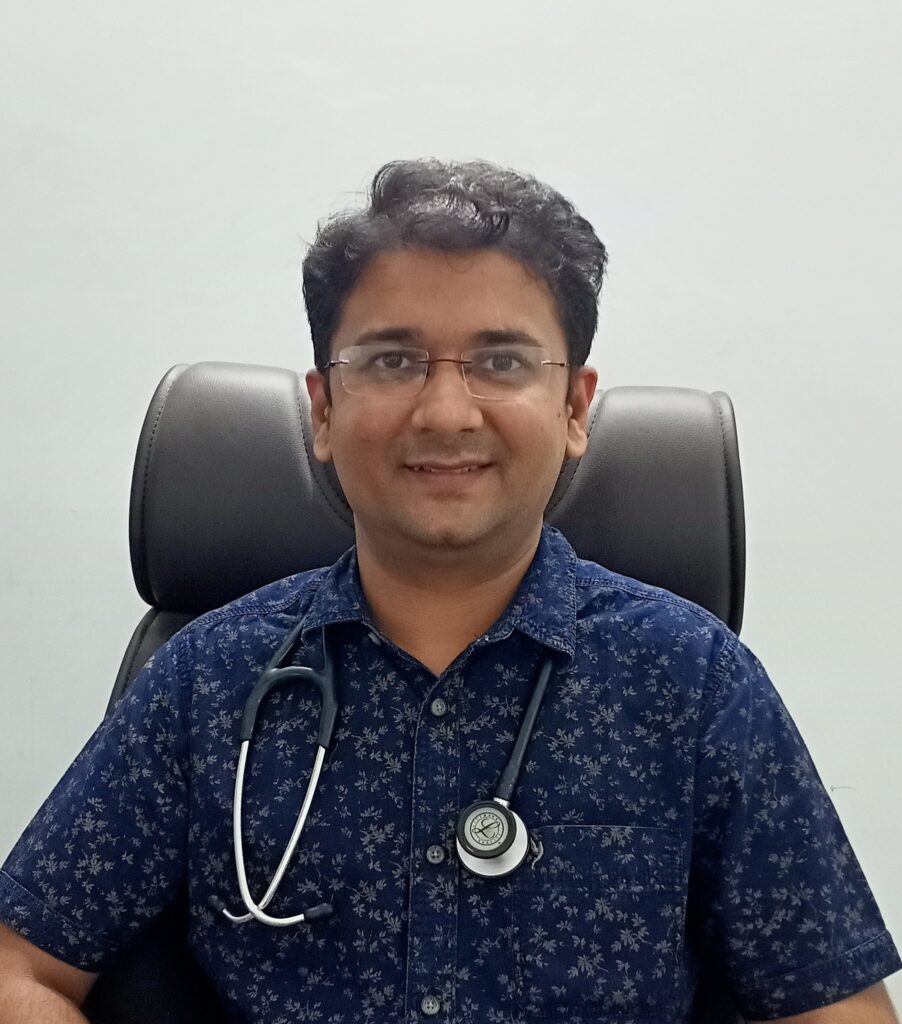




Talks By Our Expert Cardiology Doctors
Patient Journey at EPIC: Bypass Surgery
Patient Testimonial:- Heart Valve Replacement Surgery
CABG Surgery – Dr. Anoop Gupta and Dr. Anil Jain & Team
Bypass surgery – Patient Testimonial by Dr. Anil Jain
Bypass and Valve Replacement Surgery – Dr. Anil Jain
Patient Testimonial – Dr. Anil Jain
Talks By Our Expert Cardiology Doctors
Patient Testimonial – Dr. Anil Jain
Bypass and Valve Replacement Surgery – Dr. Anil Jain
Bypass surgery – Patient Testimonial by Dr. Anil Jain
CABG Surgery – Dr. Anoop Gupta and Dr. Anil Jain & Team
Patient Testimonial:- Heart Valve Replacement Surgery
Patient Journey at EPIC: Bypass Surgery
Blogs By Our Expert Cardiology
Pacemaker Implantation in Ahmedabad - Frequently Asked Questions
What symptoms suggest I might need a pacemaker?
Persistent dizziness, near-fainting, or actual blackouts (syncope) without another explanation are the most typical. Unexplained fatigue, breathlessness on minimal exertion, and a heart rate that does not increase with activity can also indicate a conduction system problem. An ECG is usually the first investigation – though the abnormality may be intermittent and require a 24-hour Holter monitor or longer-term event recorder to capture.
Is pacemaker implantation a major operation?
No. Permanent pacemaker implantation is performed under local anaesthesia through a small incision. It is not open-heart surgery. Most patients spend one night in hospital. The recovery is straightforward for most people, with arm movement restrictions on the pacemaker side for 4 to 6 weeks to allow the lead to settle.
Can I have an MRI scan after pacemaker implantation?
Modern pacemakers implanted at EPIC Hospital are MRI-conditional – meaning MRI scanning is possible under specific conditions. The scanning facility must be informed of your pacemaker before any scan is performed so that the appropriate protocol is followed.
How often does a pacemaker battery need replacing?
Modern pacemaker batteries typically last 8 to 12 years depending on how much the device is used. Battery life is monitored at every follow-up check. When the battery approaches end of life, a generator replacement procedure – much simpler than the original implant – is performed electively.
What is the difference between a pacemaker and an ICD?
A pacemaker treats a heart that beats too slowly – it prevents bradycardia. An Implantable Cardioverter Defibrillator (ICD) treats life-threatening fast rhythms – it delivers a shock to terminate ventricular fibrillation or ventricular tachycardia. Some devices combine both functions.
Is temporary pacemaker implantation available 24/7 at EPIC Hospital in Ahmedabad?
Yes. Acute symptomatic bradycardia and complete heart block are cardiac emergencies. EPIC Multispecialty Hospital, Ahmedabad has 24-hour capability for emergency temporary pacemaker implantation – a critical part of our cardiac emergency programme.
What should I avoid after pacemaker implantation?
For the first 4 to 6 weeks: avoid lifting the arm on the pacemaker side above shoulder height, avoid heavy lifting on that side, and protect the wound from water until fully healed. Full activity guidance and precautions regarding specific environments and procedures will be provided in writing before discharge from EPIC Hospital.
Are there other cardiac devices I should know about?
Patients with pacemaker implantation in Ahmedabad may also be candidates for related devices depending on their condition. See our dedicated pages on TAVI treatment in Ahmedabad for valve disease, and ASD device closure in Ahmedabad for structural heart conditions managed by our cardiac team.