
Best Heart Bypass Surgery in Ahmedabad
Restoring Blood Flow, Restoring Life
When coronary arteries become so narrowed or blocked that stents alone are not the right answer, heart bypass surgery in Ahmedabad – formally known as Coronary Artery Bypass Grafting (CABG) – offers a lasting solution. By creating new pathways that route blood around the blockages, CABG restores blood supply to the heart muscle, relieves chest pain, improves exercise capacity, and in many patients delivers a genuine survival advantage over other treatments.
EPIC Multispecialty Hospital, Ahmedabad has established itself as one of the leading centres for CABG surgery in Gujarat – performing bypass procedures across the full spectrum of complexity, with outcomes that reflect both the skill of our surgical team and the quality of our institutional support.
Understanding Coronary Artery Bypass Grafting
How CABG Works
In CABG, healthy blood vessels – called grafts – are harvested from the patient’s own body and attached to the coronary arteries beyond their blockages. Blood then flows through these new bypass routes, bypassing the diseased segments entirely. The most commonly used grafts are the internal mammary arteries (left and right IMA), the radial artery from the forearm, and the saphenous vein from the leg.
On-Pump vs Off-Pump CABG
Traditional CABG is performed on-pump – with the heart stopped and a heart-lung machine maintaining the body’s circulation. Off-pump CABG (OPCAB) is performed on a beating heart without cardiopulmonary bypass, using mechanical stabilisers to temporarily still the portion of the heart being operated on. OPCAB reduces the risk of stroke, kidney injury, and blood transfusion in selected high-risk patients. EPIC Hospital’s surgeons are experienced in both approaches.
When Is Bypass Surgery the Right Choice?
Three-Vessel and Left Main Disease
Patients with significant disease in all three major coronary arteries, or in the left main coronary artery – which supplies the majority of the left ventricle – consistently derive greater long-term survival benefit from CABG than from stenting, according to multiple landmark clinical trials.
Diabetes and Complex Coronary Anatomy
The FREEDOM trial and other major studies have established that in diabetic patients with multi-vessel coronary artery disease, CABG delivers superior long-term outcomes – fewer heart attacks, fewer repeat procedures, and better survival – compared to stenting. This is largely because arterial bypass grafts address the diffuse nature of coronary disease in diabetes rather than treating isolated focal narrowings.
When Stents Have Failed
Patients who have undergone previous percutaneous coronary intervention (PCI) with stent failure, in-stent restenosis, or recurrent disease beyond the stented segment may be best served by surgical bypass to provide more durable revascularisation.
Graft Selection at EPIC – Arterial First
EPIC Hospital’s cardiac surgeons take an arterial-first approach to graft selection. The left internal mammary artery (LIMA) is always used to bypass the left anterior descending (LAD) – the most critical coronary vessel. Where anatomy and patient risk allow, the right IMA is used as a second arterial graft. Radial artery grafts supplement arterial revascularisation further. Saphenous vein is used as an additional conduit where needed. This strategy is associated with superior long-term patency and better clinical outcomes.
Know Your Signs

Emergency Services
Our dedicated emergency team is available 24/7 to provide immediate medical care and support in critical situations.

Get In Touch
BOOK AN APPOINTMENT
Find Best Cardiology Hospital in Ahmedabad
Why choose Epic Multispecialty Hospital for Heart Surgery?

Our Team of Expert Cardiac Surgeons
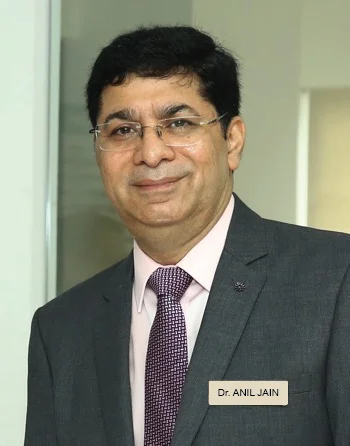
DR. ANIL JAIN
M.S., D.N.B.
Chief of Cardiovascular & Thoracic Department & Founder Director, EPIC Multispecialty Hospital
Read More

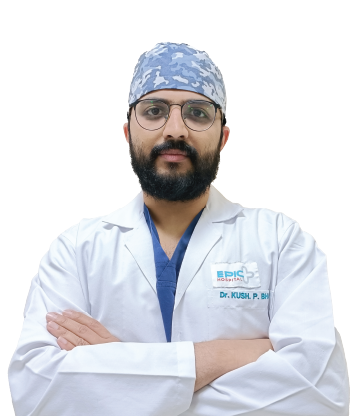
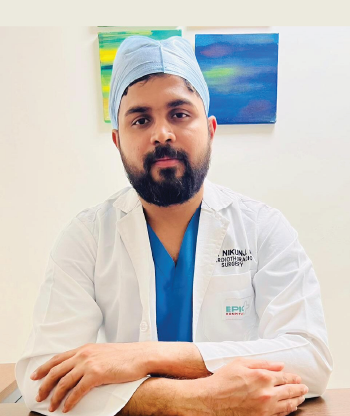
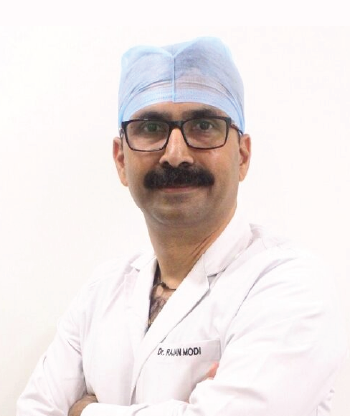

Talks By Our Expert Cardiac Doctors
Patient Journey at EPIC: Bypass Surgery
Patient Testimonial:- Heart Valve Replacement Surgery
CABG Surgery – Dr. Anoop Gupta and Dr. Anil Jain & Team
Bypass surgery – Patient Testimonial by Dr. Anil Jain
Bypass and Valve Replacement Surgery – Dr. Anil Jain
Patient Testimonial – Dr. Anil Jain
Talks By Our Expert Cardiac Doctors
Patient Testimonial – Dr. Anil Jain
Bypass and Valve Replacement Surgery – Dr. Anil Jain
Bypass surgery – Patient Testimonial by Dr. Anil Jain
CABG Surgery – Dr. Anoop Gupta and Dr. Anil Jain & Team
Patient Testimonial:- Heart Valve Replacement Surgery
Patient Journey at EPIC: Bypass Surgery
Blogs By Our Expert Cardiac
Best Heart Bypass Surgery in Ahmedabad - Frequently Asked Questions
What is heart bypass surgery (CABG) and how does it work?
Coronary Artery Bypass Grafting (CABG) creates new blood supply routes to the heart using grafts – healthy blood vessels harvested from elsewhere in the body – bypassing blocked coronary arteries and restoring blood flow to the heart muscle.
Is bypass surgery better than stenting (angioplasty)?
For patients with three–vessel disease, left main disease, or diabetes with multi–vessel coronary anatomy, major clinical trials consistently favour CABG for long–term survival, freedom from repeat procedures, and event–free survival. For simpler single–vessel disease, stenting may be equally effective. The choice is made by the heart team based on individual anatomy and risk factors.
What is off-pump bypass surgery (OPCAB)?
Off–pump CABG is bypass surgery performed on a beating heart – avoiding the heart–lung machine (cardiopulmonary bypass). It reduces stroke risk and blood transfusion in carefully selected high–risk patients. EPIC Hospital’s surgeons are experienced in OPCAB technique.
How many bypass grafts are typically placed?
The number depends on how many coronary arteries are significantly diseased. Most CABG procedures involve 2–4 grafts. Complete revascularisation – bypassing all significant blockages – is associated with the best long–term outcomes.
How long does recovery take after bypass surgery in Ahmedabad?
Most patients spend 2–3 days in the cardiac ICU followed by 4–5 days on the ward before discharge. Full recovery to normal activities takes approximately 6–8 weeks. Structured cardiac rehabilitation significantly improves recovery.
How much does heart bypass surgery cost in Ahmedabad?
The cost depends on the number of grafts, the technique used (on–pump or off–pump), and the duration of hospital stay. Contact EPIC Multispecialty Hospital Ahmedabad for a detailed bypass surgery cost estimate. Cashless insurance facilities are available.
What are the risks of bypass surgery?
All major surgery carries risk. In elective CABG at a high–volume centre like EPIC Hospital, operative mortality for low–to–moderate risk patients is very low. Your specific risk – based on EuroSCORE II and STS risk scoring – will be discussed in detail at your surgical consultation.
Can bypass surgery be combined with valve surgery?
Yes. Combined CABG and valve surgery is performed routinely at EPIC Hospital for patients with concurrent coronary and valvular disease, avoiding two separate operations and two recovery periods.