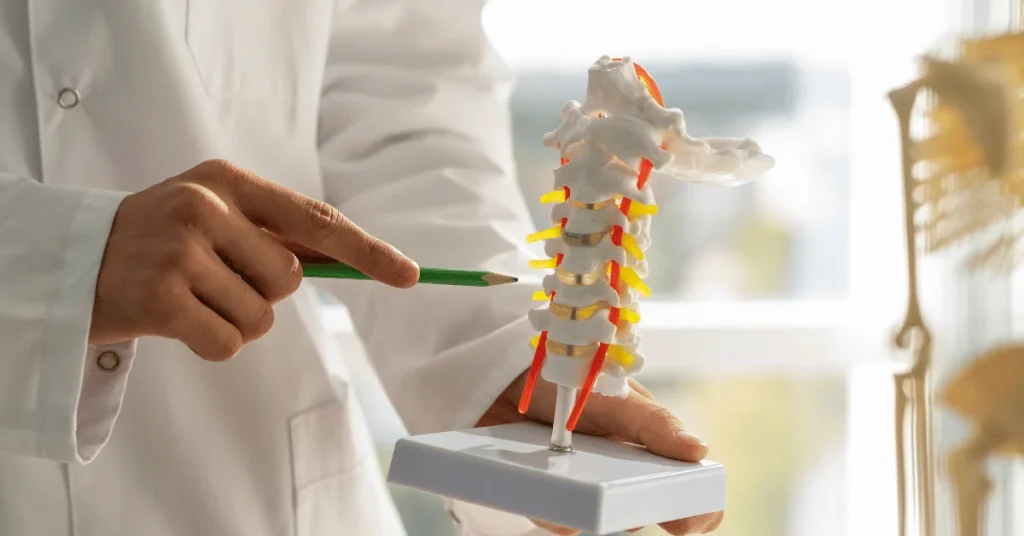
Back pain is something nearly everyone experiences, and most of the time it’s nothing to worry about. But there’s a particular set of symptoms that I, as a spine specialist, pay close attention to — and that I’d encourage you to take seriously too. When pain shoots down your leg, when your foot or fingers tingle, when a limb feels numb or weak — these are not ordinary aches. They are often your spine’s way of telling you that a nerve is being affected. Let me explain what these signals mean, so you can understand what your body may be trying to tell you.
Why the Spine Can Cause Symptoms Far From Your Back
Your spine is not just bones — running through it are the nerves that travel to your arms, legs, hands, and feet. When something in the spine presses on or irritates one of these nerves — often a slipped disc cushioning the bones, or bony changes narrowing the space the nerves pass through — the symptoms are felt not just in the back or neck, but along the path of that nerve. This is why a problem in your lower back can send pain shooting down your leg, and why a problem in your neck can leave your fingers tingling. The symptom shows up where the nerve travels, not always where the problem is.
The Signals Worth Paying Attention To
- Pain shooting down a leg or arm: Pain that travels from the lower back down into a leg, or from the neck into an arm, often following a particular path, usually means a nerve is involved. This is different from ordinary muscular back pain.
- Tingling or numbness: Pins and needles, or areas of numbness, in the legs, feet, arms, or hands can be a sign of nerve irritation in the spine.
- Weakness in a limb: If a leg or arm is becoming genuinely weak — you’re tripping, dropping things, or struggling to lift your foot — that points to nerve involvement and deserves prompt attention rather than waiting.
- Symptoms that are worsening: Nerve symptoms that are steadily getting worse over time should not be ignored, as they suggest the nerve is under increasing pressure.
The Reassuring Truth — Most of This Doesn’t Need Surgery
Now for the reassurance, because I know the word ‘spine’ frightens people. The great majority of these problems are treated successfully without any surgery at all — through physiotherapy, medication for nerve pain, posture correction, targeted injections, and time. A slipped disc, for instance, very often settles with proper conservative care. As a spine specialist, my first job is always an accurate diagnosis, and my usual recommendation is the gentlest effective treatment. Surgery is reserved for specific situations — significant or worsening nerve pressure, weakness that’s progressing, or problems that genuinely won’t settle any other way.
The Warning Signs That Need Urgent Attention
While most nerve symptoms can be assessed in good time, a few need urgent, same-day medical attention: loss of control over the bladder or bowel, numbness around the saddle area between the legs, or rapidly worsening weakness in the legs. These are uncommon, but they are red flags that should never be ignored. If you ever experience them, seek medical care immediately.
The Questions My Patients Ask Me Most
Does shooting leg pain or tingling mean I need surgery?
Usually not. These symptoms mean a nerve is likely being affected and deserve a proper assessment, but the great majority are treated successfully without surgery — through physiotherapy, medication, injections, and time. Surgery is reserved for specific situations. The key is getting an accurate diagnosis so the right, often gentle, treatment can begin.
I have a slipped disc. Will it heal without surgery?
Very often, yes. Many slipped discs settle with conservative treatment over weeks. Surgery is considered only when there’s significant nerve pressure causing weakness, when pain is severe and unrelenting, or when conservative treatment has genuinely failed. An assessment tells you which applies to you, and most people avoid an operation.
When is back or nerve pain an emergency?
Loss of control over the bladder or bowel, numbness around the saddle area between the legs, or rapidly worsening leg weakness are red flags that need same-day medical attention. These are uncommon, but they should never be ignored. For these specific symptoms, please seek care immediately rather than waiting.
So if your spine is sending these signals — shooting pain, tingling, numbness, weakness — please listen to them, but don’t panic. They deserve a proper assessment, but the answer is very often a gentle one. Understanding what your spine is telling you is the first step to getting the right help.