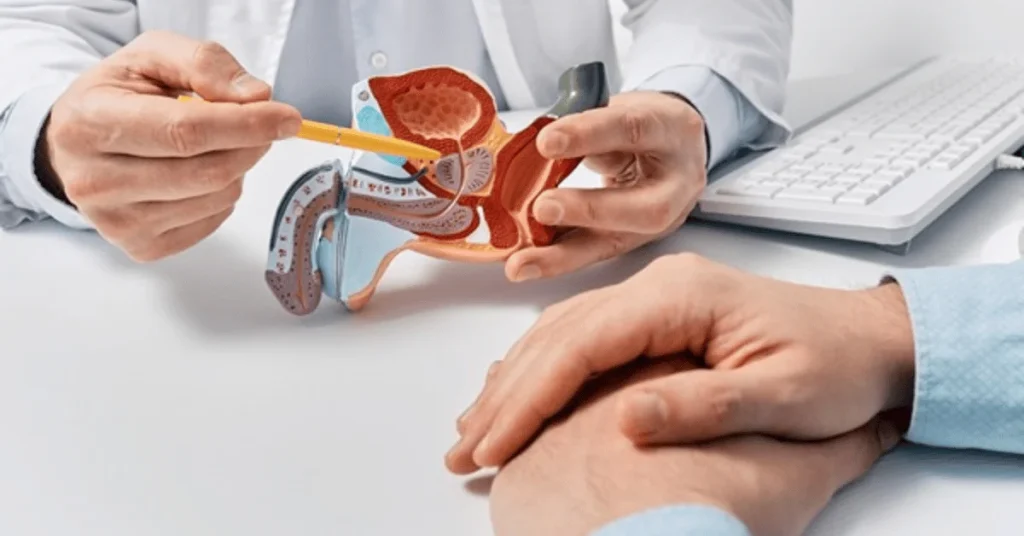
There is a conversation that far too many men avoid having, often until a problem has grown larger than it needed to. It’s the conversation about the prostate. As a urologist, I understand the reluctance — a mix of embarrassment, fear, and that very common male habit of putting off seeing a doctor. But I want to talk straight with you, man to man, because the prostate is something every man over fifty should understand, and worrying symptoms are far too often suffered in silence.
So let me clear away the awkwardness and give you the honest, practical information you actually need.
First, What the Prostate Is and Why It Causes Trouble
The prostate is a small gland that sits below the bladder. As men get older, it very commonly enlarges — and here is the most important reassurance I can offer: this enlargement is usually not cancer. It is a benign condition, simply part of ageing for many men, and it is the most common reason for the urinary symptoms I see. So while the symptoms should be checked, they are far more often due to harmless enlargement than to anything sinister.
The Symptoms Worth Paying Attention To
These are the signs that bring men to my clinic, and that you should not simply put up with:
- Getting up at night to pass urine: Frequent trips to the bathroom, especially ones that disturb your sleep, are one of the most common signs.
- A weak or slow stream: Difficulty getting started, a weaker flow than you remember, or a sense that the bladder hasn’t fully emptied.
- A sudden, urgent need to go: A strong urge that’s hard to control, or having to rush to the bathroom.
- Blood in the urine: Less common, but always a reason to see a doctor promptly — do not ignore this one.
Let me say again, because it matters: these symptoms are usually caused by benign enlargement, not cancer. But getting checked is how we tell the difference for certain — and how we treat the cause of your discomfort so you can live and sleep normally again.
The Check That Men Avoid — and Shouldn’t
Prostate health can be assessed with a simple blood test and an examination. For men over fifty, or earlier for those with a family history of prostate cancer, this is worth discussing with a doctor. The value is real: it can detect a problem early, often before symptoms appear, when it is most treatable. I have seen too many men avoid this out of embarrassment, only to wish later they had come sooner. A few minutes of mild awkwardness is a small price for peace of mind.
The Questions My Patients Ask Me Most
I get up several times a night to urinate. Should I be worried about cancer?
Most likely not. These symptoms are far more commonly caused by benign prostate enlargement, which is very common with age. But because symptoms can overlap, it’s worth getting checked — both to rule out anything serious and to treat the cause of your discomfort. Don’t ignore it, but don’t panic either.
Is the prostate examination painful or embarrassing?
It is quick and only mildly uncomfortable, and to us it is entirely routine — we do it every day. I understand the embarrassment, but it passes in moments, and the reassurance or early detection it provides is well worth it. Please don’t let awkwardness keep you from a simple, important check.
If I have prostate enlargement, will I definitely need surgery?
Not at all. Many men are managed very effectively with medication or simple measures, and surgery is considered only when needed. The earlier we assess things, the more options we usually have. Getting checked does not commit you to any procedure.
Men, please don’t let silence and embarrassment cost you your health or your comfort. The prostate is nothing to fear, and a simple check could give you reassurance or catch something early. Have the conversation. Your future self will thank you.