
GI Cancer Surgery in Ahmedabad — Gastrointestinal Cancer Surgery at EPIC Multispecialty Hospital
Gastrointestinal cancers — cancers of the oesophagus, stomach, small bowel, colon, rectum, anus, pancreas, gallbladder, and bile ducts — represent a large and diverse group of malignancies that collectively account for a significant proportion of cancer incidence and mortality in Ahmedabad and Gujarat. The surgical management of GI cancers spans technically straightforward procedures (laparoscopic right hemicolectomy for early colon cancer) to among the most demanding operations in surgery (oesophagectomy, Whipple procedure), with significant variation in complication rates, oncological outcomes, and long-term quality of life based on surgeon experience and institutional capability.
At EPIC Multispecialty Hospital, Ahmedabad, GI cancer surgery is performed by subspecialty-trained gastrointestinal oncological surgeons — with specific experience in colorectal cancer surgery (TME for rectal cancer, D3 lymphadenectomy for colon cancer), upper GI cancer surgery (oesophagectomy, total gastrectomy, Whipple procedure), and minimally invasive laparoscopic approaches for appropriate GI cancers. Every GI cancer patient is reviewed at the multi-disciplinary GI oncology tumour board before treatment is planned.
Patients with GI cancers from across Gujarat — from Vadodara, Surat, Rajkot, Gandhinagar, Anand, Nadiad, and Bharuch — and from Rajasthan and Madhya Pradesh attend our GI oncology programme at EPIC Multispecialty Hospital, Ahmedabad, for surgery that applies oncological standards matched to the specific cancer, stage, and patient.
GI Cancer Surgery at EPIC Multispecialty Hospital, Ahmedabad — Procedures by Cancer Type
- Colorectal cancer — TME and oncological resection: Rectal cancer surgery at EPIC Hospital Ahmedabad applies total mesorectal excision (TME) — dissection within the mesorectal fascia plane, removing the rectum with its complete mesorectal envelope intact. TME reduces local recurrence rates from 20 to 30 percent (conventional dissection) to under 5 to 10 percent. Neoadjuvant chemoradiotherapy (short-course RT or long-course CRT) for T3/T4 or node-positive rectal cancer is standard before TME — with 6 to 8 weeks between CRT completion and surgery. Colon cancer surgery applies complete mesocolic excision (CME) with central vascular ligation — analogous to TME — maximising lymph node harvest and reducing local recurrence for colon cancer. Laparoscopic colorectal surgery at EPIC Multispecialty Hospital, Ahmedabad, achieves equivalent oncological outcomes with faster recovery and earlier adjuvant chemotherapy initiation.
- Gastric cancer surgery: Total or subtotal gastrectomy with D2 lymphadenectomy — removing the stomach and the second tier of perigastric and regional lymph nodes — is the standard surgical treatment for resectable gastric cancer. D2 lymphadenectomy retrieves a minimum of 25 to 30 lymph nodes for adequate staging and provides superior survival to the older D1 dissection. Perioperative chemotherapy (FLOT or ECF — the FLOT-4 trial shows FLOT superiority) around gastrectomy is the current standard for resectable gastric cancer. Reconstruction after gastrectomy — Billroth I, Billroth II, Roux-en-Y reconstruction — is selected based on the extent of gastric resection. At EPIC Hospital Ahmedabad, D2 gastrectomy is performed by surgeons with specific gastric cancer surgical training.
- Oesophageal cancer surgery: Oesophagectomy — removal of the oesophagus with gastric tube reconstruction or colon interposition — is technically demanding surgery with significant physiological impact. Ivor Lewis oesophagectomy (abdominal and right thoracic approach with intrathoracic anastomosis) is the most commonly performed approach for mid and lower oesophageal cancers. Minimally invasive oesophagectomy (MIO — laparoscopic abdominal and thoracoscopic thoracic dissection) reduces respiratory complications and intensive care stay. Neoadjuvant chemoradiotherapy (CROSS protocol — carboplatin-paclitaxel with concurrent 41.4 Gy) for T2+ or node-positive oesophageal squamous cell carcinoma and adenocarcinoma is standard before oesophagectomy at EPIC Multispecialty Hospital, Ahmedabad.
- Pancreatic cancer — Whipple procedure: Pancreaticoduodenectomy (Whipple procedure) for pancreatic head and periampullary cancer — removing the head of the pancreas, duodenum, gallbladder, and common bile duct with reconstruction of pancreatic, biliary, and gastric continuity — is one of the most complex abdominal operations. Pancreatic fistula (the most common serious complication), delayed gastric emptying, and bile leak are managed with standardised protocols. FOLFIRINOX or gemcitabine-nab-paclitaxel neoadjuvant chemotherapy for borderline resectable pancreatic cancer before Whipple procedure improves R0 resection rates. At EPIC Hospital Ahmedabad, Whipple procedures are performed by HPB surgeons with specific pancreatic cancer surgical experience.
- Anal cancer — chemoradiotherapy first: Anal canal cancer (squamous cell carcinoma) is managed with definitive concurrent chemoradiotherapy — mitomycin-C plus 5-fluorouracil with pelvic radiotherapy (Nigro protocol) — achieving complete response in 70 to 80 percent of patients, avoiding abdominoperineal resection (colostomy) in most cases. Surgery (APR) is reserved for residual or recurrent disease after chemoradiotherapy. This organ-preserving approach is the standard of care at EPIC Multispecialty Hospital, Ahmedabad.
- Gallbladder cancer surgery: Gallbladder cancer is disproportionately prevalent in Gujarat — associated with gallstones, Salmonella typhi carrier state, and potentially anomalous pancreato-biliary junction. Incidental gallbladder cancer (found in cholecystectomy specimens) requires re-resection for T1b disease and above — cholecystectomy bed resection with regional lymph node dissection. Locally advanced gallbladder cancer requires major hepatic resection (segments IVb and V) with bile duct excision for appropriate cases. At EPIC Hospital Ahmedabad, incidental and primary gallbladder cancers are managed by our HPB oncological team.
GI Cancer Surgery in Ahmedabad — Why Procedural Volume and Oncological Technique Determine Your Outcome
The volume-outcome relationship in GI cancer surgery is one of the best-documented in oncological surgery. Oesophagectomy at high-volume centres (above 20 per year) carries peri-operative mortality of 2 to 4 percent; at low-volume centres (below 5 per year), mortality reaches 10 to 15 percent. Pancreaticoduodenectomy at high-volume centres has mortality below 3 percent; at low-volume centres, mortality is 10 percent or higher. For rectal cancer specifically, the local recurrence rate after TME at specialist centres is 3 to 8 percent; the same operation performed without rigorous TME technique produces local recurrence rates of 20 to 30 percent — rates that were considered acceptable only a generation ago.
These differences reflect not only the individual surgeon’s skill but the institutional infrastructure: the specialised anaesthesia, the ability to manage post-operative complications (pancreatic fistula, anastomotic leak, chyle leak), the multi-disciplinary team that provides neoadjuvant therapy and adjuvant chemotherapy in the correct sequence, and the high-dependency care that complex GI cancer surgery patients require in the early post-operative period. At EPIC Multispecialty Hospital, Ahmedabad, GI cancer surgery is embedded in this infrastructure — not performed as standalone surgery in a general hospital context.
For patients in Ahmedabad and Gujarat with GI cancers — particularly those requiring complex upper GI surgery (oesophagectomy, Whipple) or rectal cancer with TME — a consultation at EPIC Multispecialty Hospital, Ahmedabad, before committing to surgery is worthwhile. The question of where to have a Whipple procedure or an oesophagectomy is not merely one of surgical availability — it is one of safety and long-term cancer outcome, and the answer should be based on volume-outcome data, not on geographic proximity.
Know Your Signs

Non-healing oral ulcers or white/red patches
Post-menopausal or abnormal uterine bleeding
Chronic cough, blood in sputum, or breathlessness
Unexpected lumps in the neck, breast, abdomen, or limbs
Sudden weight loss or loss of appetite
Persistent bone pain or swelling
Persistent hoarseness or difficulty swallowing
Change in bowel or bladder habits
Emergency Services
Our dedicated emergency team is available 24/7 to provide immediate medical care and support in critical situations.

Get In Touch
BOOK AN APPOINTMENT
Find Best Cancer Surgein in Ahmedabad

Highly Experienced Onco Surgeon Team
24×7 Critical Care & Oncology Support
Complete cancer care under one roof - screening, diagnosis, treatment, transplant & follow-up
World-class OT facilities with advanced technology like ICG-guided Sentinel Node Biopsy for accurate staging and Image-Guided Surgery for precise tumor removal, ensuring safer, more effective cancer treatment.
Detects lesions <1 cm and predicts malignancy probability—improving early diagnosis.
Qure.ai AI-powered cancer detection
Specialized procedures like CRS, HIPEC & PIPAC for advanced disease
40 bedded ICU & Critical Care Unit
Affordable treatment with high-quality outcomes
Our Team of Expert Onco Surgeons




DR. RIDHAM SHAH
M.S. (General Surgery) Dr. N.B. (Surgical Oncology)



DR. SHALIN SHAH
M.S. (General Surgery) Dr. N.B. (Surgical Oncology)

Talks By Our Onco Surgeons
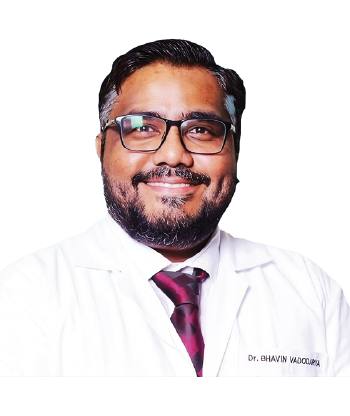
Oral Cancer Surgery – Dr. Bhavin Vadodariya, Surgical Oncologist and Head and Neck Surgeon
Inspiring Healing: Expert Care by Dr. Rutul Patel & Dr. Jay Kumar Mehta!
Breast Cancer – Dr. Tarang Patel
Talks By Our Onco Surgeons
Breast Cancer – Dr. Tarang Patel
Inspiring Healing: Expert Care by Dr. Rutul Patel & Dr. Jay Kumar Mehta!
Oral Cancer Surgery – Dr. Bhavin Vadodariya, Surgical Oncologist and Head and Neck Surgeon

Frequently Asked Questions — GI Cancer Surgery in Ahmedabad
What GI cancers are operated on at EPIC Hospital Ahmedabad?
EPIC Multispecialty Hospital, Ahmedabad, performs GI cancer surgery for colorectal cancer (laparoscopic colectomy, TME for rectal cancer), gastric cancer (total and subtotal gastrectomy with D2 lymphadenectomy), oesophageal cancer (Ivor Lewis oesophagectomy), pancreatic cancer (Whipple procedure), gallbladder cancer (radical cholecystectomy), anal cancer (post-chemoradiotherapy salvage), and small bowel malignancies.
What is total mesorectal excision (TME) and why does it matter for rectal cancer?
TME dissects within the mesorectal fascia plane, removing the rectum with its intact mesorectal envelope — containing the draining lymph nodes and autonomic nerve support. TME reduces local recurrence in rectal cancer from 20 to 30 percent to under 5 to 10 percent. It is the global standard for rectal cancer surgery and is applied at EPIC Multispecialty Hospital, Ahmedabad, for all patients undergoing curative rectal cancer resection
What is a Whipple procedure and how long does recovery take?
The Whipple procedure (pancreaticoduodenectomy) removes the pancreatic head, duodenum, gallbladder, and common bile duct, with reconstruction. It takes 4 to 8 hours under general anaesthesia. Hospital stay is 7 to 14 days. Recovery to full activity takes 6 to 8 weeks. The most common complication is pancreatic fistula, managed with drain management and nil-by-mouth protocols at EPIC Hospital Ahmedabad.
What is neoadjuvant chemotherapy and when is it used for GI cancer?
Neoadjuvant chemotherapy is given before surgery to reduce tumour size, improve resectability, and treat micrometastatic disease. Used for rectal cancer (chemoradiotherapy before TME), oesophageal cancer (CROSS protocol before oesophagectomy), gastric cancer (FLOT before gastrectomy), and borderline resectable pancreatic cancer (FOLFIRINOX before Whipple). Tumour board review at EPIC Multispecialty Hospital, Ahmedabad, determines neoadjuvant eligibility for each patient.
Is laparoscopic surgery available for GI cancer at EPIC Hospital Ahmedabad?
Yes. Laparoscopic colorectal surgery (right and left hemicolectomy, anterior resection, Hartmann’s procedure), laparoscopic gastrectomy, and laparoscopic Whipple procedure are available at EPIC Multispecialty Hospital, Ahmedabad, for appropriate GI cancer cases. Minimally invasive surgery achieves equivalent oncological outcomes with faster recovery and earlier adjuvant chemotherapy initiation
Is EPIC Hospital Ahmedabad experienced in rectal cancer surgery with TME?
Yes. EPIC Multispecialty Hospital, Ahmedabad, performs rectal cancer surgery with total mesorectal excision (TME), neoadjuvant chemoradiotherapy coordination, and laparoscopic and open approaches depending on tumour location and patient anatomy. Local recurrence rates at our programme reflect TME technique quality standards.
What is gallbladder cancer and is it common in Gujarat?
Gallbladder cancer is disproportionately prevalent in Gujarat — associated with chronic gallstone disease and potentially Salmonella typhi carrier state. It is frequently diagnosed incidentally in cholecystectomy specimens. T1b and higher gallbladder cancer requires re-resection with cholecystectomy bed hepatectomy and lymph node dissection. Our HPB team at EPIC Hospital Ahmedabad manages gallbladder cancer at all stages.
What is the cost of GI cancer surgery in Ahmedabad at EPIC Hospital?
GI cancer surgery costs at EPIC Multispecialty Hospital, Ahmedabad, vary considerably based on the procedure — laparoscopic colectomy carries lower costs than Whipple procedure or oesophagectomy. Transparent procedure-specific pricing is available. Insurance and PM-JAY cover all major GI cancer surgery indications. Contact our patient services team for current pricing.
GI Cancer Surgery in Ahmedabad — EPIC Multispecialty Hospital
GI cancer surgery at EPIC Multispecialty Hospital, Ahmedabad, is performed by subspecialty GI oncological surgeons applying the technique — TME for rectal cancer, D2 lymphadenectomy for gastric cancer, adequate surgical margins for pancreatic cancer — that the oncological evidence shows produces the best long-term outcomes for each specific tumour type.
Book a GI cancer surgery consultation online, call EPIC Multispecialty Hospital Ahmedabad today, WhatsApp your CT staging and endoscopy reports for initial tumour board review, or visit us directly — and get GI cancer surgery planned for the specific standards your cancer type requires.