
Liver Transplant Surgeon in Ahmedabad - Comprehensive Liver Transplant Programme at EPIC Hospital
Liver transplantation is the only curative treatment for end-stage liver disease – the point at which the liver has sustained irreversible damage and can no longer maintain the functions that sustain life. For patients who reach this stage, whether from cirrhosis due to hepatitis B or C, alcoholic liver disease, non-alcoholic steatohepatitis, autoimmune liver disease, or acute liver failure – transplantation offers a genuine second chance that no other treatment can provide.
At EPIC Multispecialty Hospital, Ahmedabad, our liver transplant programme provides the full continuum of transplant care – from initial assessment and transplant listing, through the surgical procedure itself, to lifelong post-transplant immunosuppression management and follow-up. Patients are evaluated for both cadaveric donor transplantation and living donor liver transplant (LDLT), where a portion of a living donor’s liver is used.
Patients travel to our liver transplant programme in Ahmedabad from across Gujarat – from Surat, Vadodara, Rajkot, Gandhinagar, Anand, Bharuch, and beyond – as well as from Rajasthan and Madhya Pradesh, because access to a functioning, comprehensive liver transplant programme in this region is not widely available.
Liver Transplant at EPIC Multispecialty Hospital, Ahmedabad – The Full Clinical Pathway
- Transplant evaluation and candidacy assessment: Not every patient with liver failure is a transplant candidate. Our transplant evaluation at EPIC Hospital Ahmedabad covers hepatic function assessment (Child-Pugh score, MELD score), portal hypertension severity, cardiopulmonary fitness, renal function, nutritional status, absence of active malignancy outside defined criteria, psychosocial assessment, and alcohol abstinence documentation where relevant. The evaluation is multi-disciplinary – hepatologist, transplant surgeon, cardiologist, anaesthetist, transplant coordinator, and social worker.
- Cadaveric donor liver transplantation: In cadaveric (deceased donor) transplantation, a liver from a brain-dead donor is retrieved and transplanted into the recipient. In India, deceased donor transplantation is coordinated through the state organ transplant authority and NOTTO (National Organ and Tissue Transplant Organisation). Our transplant programme at EPIC Multispecialty Hospital, Ahmedabad, participates in the deceased donor allocation system and manages waitlisted patients with regular MELD reassessment and priority adjustment.
- Living donor liver transplant (LDLT): In LDLT, the right or left lobe of a healthy donor’s liver – typically a first-degree relative – is surgically removed and transplanted into the recipient. The donor’s liver regenerates to near-normal volume within 6 to 8 weeks. LDLT reduces dependence on deceased donor availability and is particularly relevant in India where deceased donation rates remain low. Donor evaluation at EPIC Hospital Ahmedabad is comprehensive – ensuring the donor’s safety is the paramount concern, not accelerating the recipient’s access to transplant.
- The transplant operation itself: Orthotopic liver transplantation involves removing the diseased liver and implanting the donor liver in its anatomical position – connecting the hepatic artery, portal vein, hepatic veins, and bile duct. The operation typically takes 6 to 12 hours and requires transfusion support, venovenous bypass in some cases, and intensive intraoperative anaesthetic monitoring. Our transplant surgical team at EPIC Multispecialty Hospital, Ahmedabad, operates with dedicated transplant anaesthetists and perfusionists experienced in major hepatic surgery.
- Post-transplant immunosuppression and rejection management: The transplanted liver requires lifelong immunosuppression – typically tacrolimus as the primary agent, often combined with mycophenolate mofetil and tapering corticosteroids. Drug level monitoring, dose adjustment, and vigilant screening for infection, metabolic complications, and malignancy are the foundation of post-transplant care. Acute rejection – treated with pulsed corticosteroids and, if steroid-resistant, anti-thymocyte globulin – is managed through regular liver function monitoring and biopsy when indicated.
- Hepatocellular carcinoma (HCC) and liver transplant: Liver transplantation is a curative option for hepatocellular carcinoma within defined criteria – the Milan criteria (single lesion under 5cm, or up to three lesions each under 3cm, no macrovascular invasion, no extrahepatic spread) offer excellent post-transplant survival rates comparable to transplantation for benign disease. Our transplant team at EPIC Hospital Ahmedabad evaluates HCC patients against current criteria and bridges tumour progression with locoregional therapy (TACE, ablation) during the wait for a donor organ.
Understanding When Liver Transplant Becomes the Right Conversation – and What the Process Looks Like
Most patients who are eventually referred for liver transplant evaluation have been managing their liver disease for years before reaching the point where transplantation is seriously discussed. They’ve been through antiviral therapy for hepatitis, or alcohol abstinence programmes, or immunosuppression for autoimmune hepatitis. Some have had variceal bleeds managed endoscopically, or ascites drained repeatedly, or episodes of hepatic encephalopathy that have frightened both them and their families. The MELD score – a mathematical model using bilirubin, creatinine, and INR to predict 90-day mortality in cirrhosis – is the objective marker that indicates when the risk of remaining on the waiting list is outweighed by the risk of the transplant procedure.
In Gujarat, the specific causes of liver disease that lead to transplant referral reflect the state’s disease burden. Hepatitis B-related cirrhosis – more prevalent in Gujarat than in much of India – is a significant contributor. Alcohol-related liver disease remains common, though the post-transplant requirement for sustained abstinence is a criterion our evaluation process addresses carefully. Non-alcoholic steatohepatitis (NASH), driven by the high prevalence of metabolic syndrome and type 2 diabetes in urban Ahmedabad, is an increasingly important cause of cirrhosis that leads to transplant consideration.
For living donor liver transplant – which is the more relevant pathway for most patients in Ahmedabad given India’s deceased donation rates – the donor evaluation is as rigorous as the recipient evaluation. A healthy person undergoing major liver surgery for the benefit of another person carries a small but real donor risk, and that risk is only acceptable when the donor’s fitness, anatomy, and psychological readiness are comprehensively assessed. At EPIC Multispecialty Hospital, Ahmedabad, donor safety is non-negotiable – donors who do not meet the criteria for safe donation are not approved, regardless of the recipient’s clinical urgency.
If you have been told your liver disease is progressing toward the point where transplantation may need to be considered, or if you have a family member who is willing to be evaluated as a living donor, the appropriate first step is a structured transplant evaluation at EPIC Hospital Ahmedabad. The evaluation itself does not commit anyone to surgery – it establishes whether transplantation is medically appropriate, which donor pathway is available, and what the realistic timeline and outcomes look like.
Know Your Signs

Abdomen pain
Nausea and vomiting
Frequent loose stools with blood
Jaundice with itching
Difficulty in swallowing
Unexplained Weight loss and loss of hunger
Unexplained weight loss or weight gain
Severe Constipation or Bloating
Emergency Services
Our dedicated emergency team is available 24/7 to provide immediate medical care and support in critical situations.

Get In Touch
BOOK AN APPOINTMENT
Find Best Gastro Surgeon in Ahmedabad

Expert Surgeons
Multidisciplinary Team of Experts
State-of-the-Art Medical & Surgical ICU
State-of-the-Art Surgical Technology
Advanced Diagnostic and Pre-Surgical Planning
Focus on Minimally Invasive GI Surgeries - Laparoscopy Operation Theaters
Storz High-Definition Laparoscopic System
Harmonic Scalpel and Ligasure for Safe Haemostasis
Well-Equipped Endoscopic Apparatus
Pentax Video Endoscopic System
Our Expert Team of Surgeon
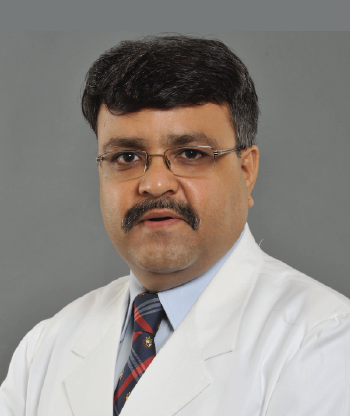
DR. HITESH CHAVDA
M.S., F.R.C.S.
Talks By Our Expert Gastrointestinal Doctors
Patient Testimonial – Fistula Surgery by Dr. Gaurang Shah
Our Patient Testimonial Gastrointestinal
Patient Testimonial – Fistula Surgery by Dr. Gaurang Shah
Blogs By Our Expert Gastrointestinal

Frequently Asked Questions - Liver Transplant Surgeon in Ahmedabad
Who needs a liver transplant?
Liver transplant is indicated for end-stage liver disease – cirrhosis with MELD score above 15 to 20 and significant decompensation events (variceal bleeding, ascites, hepatic encephalopathy), acute liver failure not responding to medical treatment, and hepatocellular carcinoma within defined transplant criteria. The decision follows comprehensive evaluation at a transplant centre like EPIC Multispecialty Hospital, Ahmedabad.
What is MELD score and why does it matter for liver transplant?
The MELD (Model for End-Stage Liver Disease) score uses serum bilirubin, creatinine, and INR to calculate a 90-day mortality risk in cirrhosis. A higher MELD score indicates greater disease severity and higher waitlist mortality. In deceased donor transplant allocation, MELD score determines priority. At EPIC Multispecialty Hospital, Ahmedabad, MELD is reassessed regularly for all listed patients and updated to reflect changing clinical status.
What is living donor liver transplant (LDLT) and is it available at EPIC Hospital Ahmedabad?
In LDLT, the right or left lobe of a living donor’s liver (typically a family member) is surgically removed and transplanted into the recipient. The donor’s remaining liver regenerates to functional volume within 6 to 8 weeks. LDLT is the primary pathway for most patients in Ahmedabad given India’s low deceased donation rates. Yes, LDLT is available at EPIC Multispecialty Hospital, Ahmedabad, with comprehensive donor evaluation to ensure donor safety.
What are the risks of liver transplant for the donor?
Living donor right lobe donation – the most common LDLT procedure – carries a donor mortality risk of approximately 0.1 to 0.5 percent in experienced centres, and a significant morbidity rate of 15 to 30 percent including bile leaks, bleeding, wound complications, and hernia. At EPIC Hospital Ahmedabad, donor evaluation is rigorous and comprehensive – donors who do not meet anatomical, physiological, and psychological criteria are not approved for donation.
Can liver transplant cure hepatocellular carcinoma?
Yes, for HCC within Milan criteria – single tumour under 5cm, or up to three tumours each under 3cm, without macrovascular invasion or extrahepatic disease – liver transplant offers 5-year survival rates of 70 to 75 percent, comparable to transplant for benign disease. HCC beyond Milan criteria has significantly worse post-transplant outcomes. Our transplant team at EPIC Multispecialty Hospital, Ahmedabad, assesses HCC patients rigorously against current criteria.
What immunosuppression is needed after liver transplant?
Lifelong immunosuppression is required to prevent rejection. The standard regimen at EPIC Hospital Ahmedabad includes tacrolimus as the primary calcineurin inhibitor, often combined with mycophenolate mofetil and a tapering course of corticosteroids. Drug levels are monitored regularly and doses adjusted based on levels, renal function, and infection risk. Immunosuppression cannot be stopped – discontinuation leads to rejection and graft loss.
What is the survival rate after liver transplant at EPIC Multispecialty Hospital Ahmedabad?
One-year survival after liver transplant in well-selected patients at experienced centres ranges from 85 to 90 percent; 5-year survival from 70 to 80 percent. Individual outcomes depend on the underlying disease, MELD score at transplant, donor organ quality, and post-transplant management. Our transplant team at EPIC Hospital Ahmedabad will provide realistic, individualised outcome estimates during the evaluation process.
What is the cost of liver transplant in Ahmedabad at EPIC Hospital?
Liver transplant cost at EPIC Multispecialty Hospital, Ahmedabad, covers pre-transplant evaluation, the surgical procedure (recipient and donor for LDLT), ICU and ward stay, immunosuppression, and post-transplant follow-up. LDLT and cadaveric transplant carry different cost structures. We provide transparent cost counselling during the evaluation process. PM-JAY and state government schemes, as well as private insurance, may provide partial coverage. Contact our transplant coordinator for detailed current pricing.
Is EPIC Hospital Ahmedabad a good liver transplant centre in Gujarat?
EPIC Multispecialty Hospital, Ahmedabad, operates a comprehensive liver transplant programme with a dedicated transplant surgical team, hepatologist-led post-transplant care, transplant coordinators, and the ICU infrastructure that major hepatic surgery requires. Patients from across Gujarat and from Rajasthan and Madhya Pradesh access our transplant programme. For patients in this region seeking liver transplant evaluation, EPIC Hospital Ahmedabad provides that access with the depth of programme it demands.
Liver Transplant Surgeon in Ahmedabad – EPIC Multispecialty Hospital
Liver transplantation at EPIC Multispecialty Hospital, Ahmedabad, begins with an honest, thorough evaluation – of whether transplantation is appropriate, which pathway is available, what the timeline looks like, and what outcomes are realistic for your specific situation.
Book a liver transplant evaluation consultation online, call EPIC Multispecialty Hospital Ahmedabad today, WhatsApp your liver function tests, MELD score, or clinical summary for initial review, or visit our liver transplant programme in Ahmedabad directly – and get the assessment your situation requires.