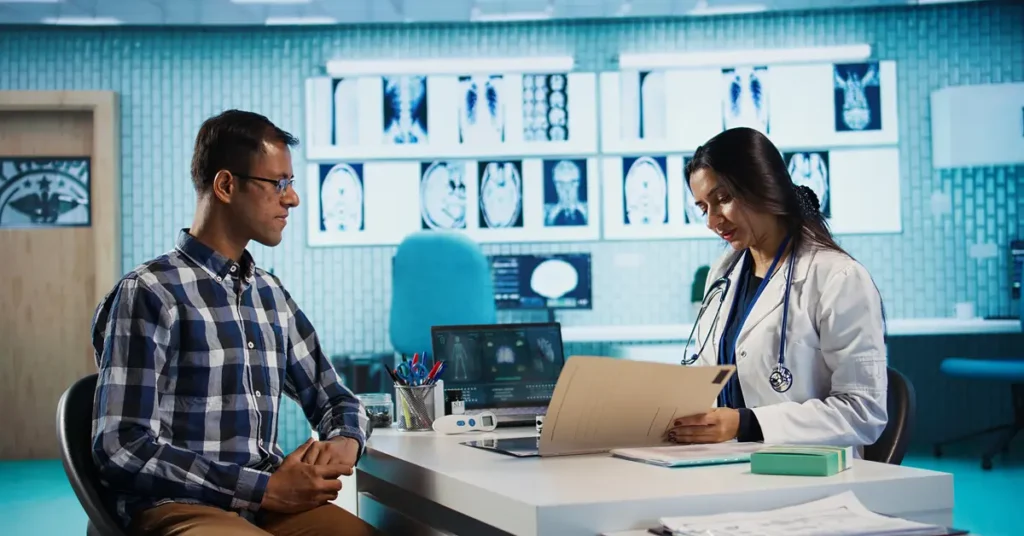
When a patient sits across from me after a cancer diagnosis, there are usually two things happening at once. On the surface, they are asking practical questions about surgery — what it involves, how long recovery takes, what the risks are. But underneath, there is a much bigger question that nobody quite says out loud: will I be alright?
I have been a surgical oncologist at EPIC Multispecialty Hospital, Ahmedabad, for many years. I have performed surgery for breast cancer, GI cancers, gynaecological cancers, and other solid tumours. And across all those years and all those patients, the most important thing I have learned is this: the conversation before surgery matters as much as the surgery itself. A patient who understands what is going to happen, who feels heard and prepared, recovers better, asks better questions during follow-up, and has a healthier relationship with their treatment.
Surgery Is Usually Good News in Cancer
I want to challenge something that many patients believe when they first hear the word surgery in the context of cancer: that it means the cancer is bad, or that things are serious. The truth is actually the opposite for many cancers.
When a surgeon can operate on your cancer, it almost always means there is an opportunity for cure, or for very meaningful long-term control. Surgery is the treatment with the highest potential for complete removal of solid tumours. The fact that I am recommending surgery is, in most cases, a hopeful sign — not a frightening one.
The cancers we operate on most frequently in Ahmedabad — breast cancer, colorectal cancer, ovarian cancer, gastric cancer, liver and pancreatic tumours — all have well-established surgical treatments with good long-term outcomes when the disease is caught at an appropriate stage and managed by an experienced team.
What a Multi-Disciplinary Team Means for You
At EPIC Multispecialty Hospital, Ahmedabad, no cancer patient is managed by one doctor making one set of decisions alone. Every new patient is discussed in a multi-disciplinary tumour board — a meeting where I sit with medical oncologists, radiation oncologists, radiologists, and pathologists, and we look at the same scans, the same biopsy report, and the same clinical picture together.
The output of that meeting is a treatment plan — not my plan, but the team’s plan. It answers questions like: should surgery come first, or should chemotherapy be given before surgery to shrink the tumour? Is the entire tumour removable, or do we need to reduce it first? What should follow surgery — radiation, targeted therapy, immunotherapy?
This matters for patients because it means the care you receive at EPIC Hospital Ahmedabad reflects a collective expertise, not a single opinion. And it means your surgeon is not making decisions in isolation — they are making them as part of a team whose only goal is your best outcome.
What Cancer Surgery Feels Like — Practically Speaking
I want to give you a realistic picture of what to expect, because fear of the unknown is often worse than the reality.
Before surgery, you will meet the anaesthetist and have a pre-operative assessment. You will receive clear instructions about food, water, and medications in the days before. On the day of surgery, the team will make sure you are comfortable and that every question has been answered before you are taken to the operating theatre. Most patients tell me they remember nothing between the anaesthesia being given and waking up in the recovery room.
After surgery, pain management is a priority. Modern anaesthesia and pain protocols mean that most patients are significantly more comfortable post-operatively than they expect. You will be encouraged to move early — often the day after surgery — because early movement is one of the best things for recovery. Depending on the procedure, hospital stay ranges from two to three days for some surgeries to a week or more for complex operations.
The most important thing I tell my patients: healing is not a straight line. There will be better days and harder days. That is normal. And our team is with you through all of it.
After Surgery — What Comes Next
Surgery is rarely the end of cancer treatment — it is usually the beginning of a carefully planned follow-up programme. After the pathology report comes back from the tumour we removed, the team meets again to discuss what the final findings show and what further treatment is recommended.
This might mean a course of chemotherapy to reduce the risk of the cancer coming back. It might mean targeted therapy if specific molecular markers are found. It might mean radiotherapy to the surgical area. Or it might mean simply careful surveillance — regular scans and blood tests to confirm that the cancer has not returned.
I encourage my patients to approach this phase with patience. The treatment plan after surgery is designed for your long-term wellbeing, not just the immediate recovery. Every step of it has a reason, and I am always happy to explain that reason if something is unclear.
Cancer surgery, done by the right team with the right plan, gives people a genuine chance at long and healthy lives. I see that outcome regularly at EPIC Multispecialty Hospital, Ahmedabad, and I want the same for every patient who comes through my door.
Common Questions Patients Ask
Will I feel pain after cancer surgery?
Pain management is a central part of post-operative care at EPIC Multispecialty Hospital, Ahmedabad. Most patients are surprised by how well their pain is controlled with modern analgesia protocols. You will never be left in significant discomfort — the nursing team monitors pain regularly and adjusts medication as needed.
How soon after surgery can chemotherapy start?
This varies by cancer type and surgery. Most adjuvant chemotherapy begins four to six weeks after surgery, once the surgical wound has healed adequately. The exact timing is decided in the post-operative tumour board meeting, taking into account the pathology findings and the patient’s recovery.
Can cancer surgery completely cure cancer?
For many early and intermediate-stage solid cancers, surgery that achieves complete removal with clear margins offers a genuine chance of cure. The specific prognosis depends on cancer type, stage, and the completeness of resection. I discuss realistic outcomes honestly with every patient during the pre-operative consultation.
What if I am too frightened to have surgery?
This is a completely understandable feeling, and you are not alone in it. Please come and talk to me — that conversation, without pressure or judgment, is where fear often begins to ease. Understanding what is actually going to happen, step by step, is the most effective antidote to the anxiety that comes from not knowing.
Is cancer surgery available for all types of cancer at EPIC Hospital Ahmedabad?
Our surgical oncology programme at EPIC Multispecialty Hospital, Ahmedabad, covers breast, gastrointestinal, hepatobiliary, gynaecological, urological, and head and neck cancers, among others. We work within a full multi-disciplinary oncology programme covering medical oncology, radiation oncology, and pathology.
Book a Consultation at EPIC Multispecialty Hospital, Ahmedabad
If you have been diagnosed with cancer and surgery has been recommended, or if you would like a second opinion before committing to a treatment plan, please come and see me at EPIC Multispecialty Hospital, Ahmedabad. Book a consultation online, call our team, or WhatsApp your biopsy report and imaging for an initial review. You do not have to face this alone — and you do not have to face it without a clear plan.